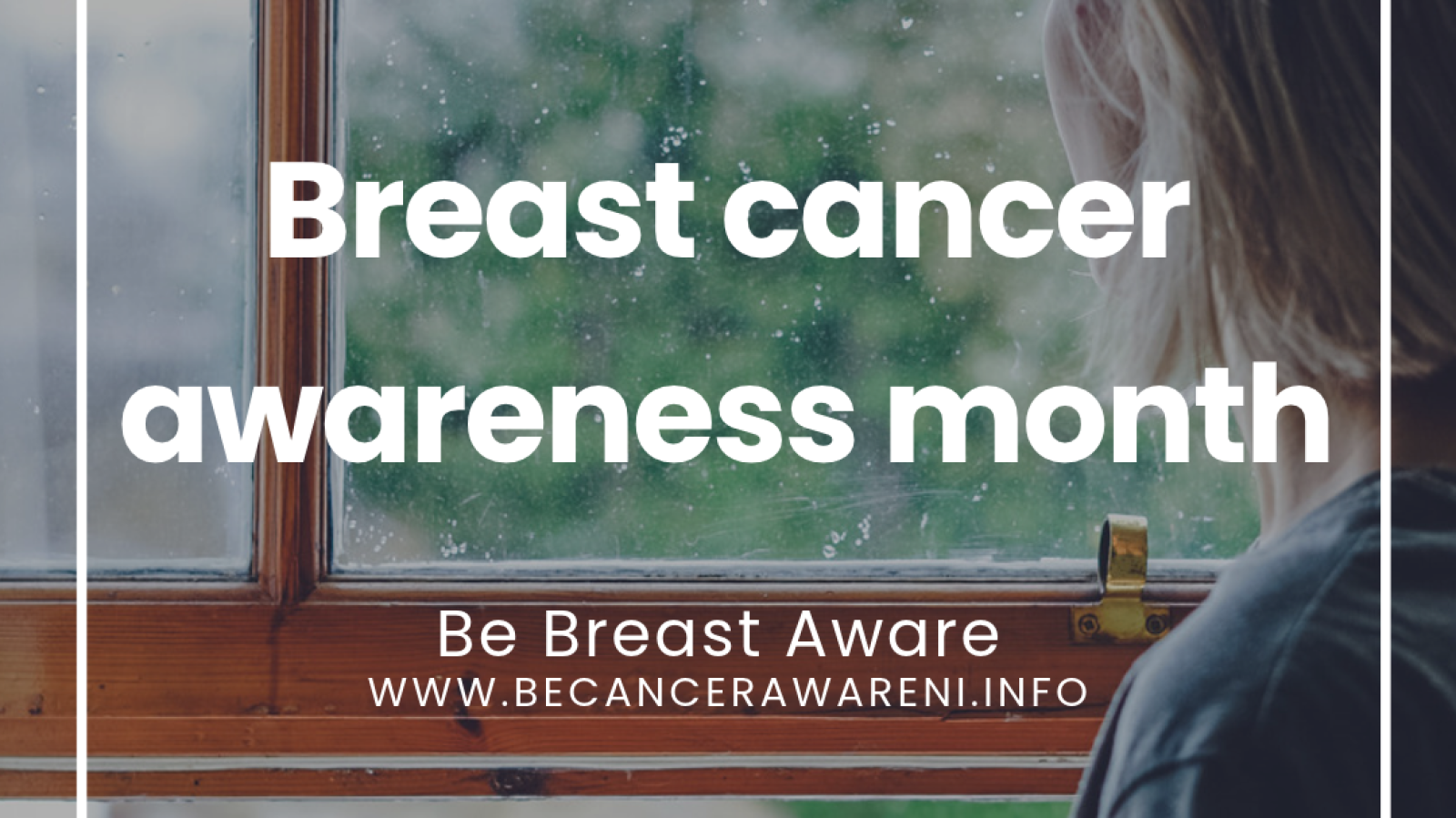
This Breast Cancer Awareness Month [October] the Public Health Agency (PHA) is encouraging anyone who is eligible to attend for breast screening when invited, and reminding everyone to be aware of the signs and symptoms of breast cancer.
Dr Emma Church, Consultant in Public Health at the PHA, said:
“We are encouraging all women to be breast aware. Breast cancer is the most common cancer in women in Northern Ireland, accounting for around 30% of cancers diagnosed in women, with around 1,500 women diagnosed each year. While breast cancer can occur at any age, the risk increases as we get older and most cases occur in women over 50. That is why it is so important to attend for breast screening when invited. Screening can detect cancers at an early stage when treatment is more likely to be successful. In 2024/25, breast screening detected 644 breast cancers in Northern Ireland. Screening is routinely offered every three years to women aged 50 to 70, and it could save your life.
“However, breast cancer can develop at any age, and anyone can get it. It can also develop after a screening appointment, even if your most recent result was clear. Therefore, it is important to check your breasts or chest regularly and know what is normal for you. This will help you notice any changes that are unusual for you. If you do notice any changes, contact your GP.”
You should familiarise yourself with the breast awareness five-point code:
1. Know what is normal for you;
2. Know what changes to look and feel for;
3. Look and feel your breasts/chest;
4. Report any changes to your GP immediately;
5. Attend breast screening when invited from age 50.
Breast changes are common and are often caused by conditions other than cancer, but it is important to have any new or unusual changes checked by your GP. If you notice a change that is not normal for you, contact your GP as soon as possible.
Common symptoms of breast cancer include:
Appearance:
- a change in the size, shape or outline of either breast, especially those caused by arm movement;
- any puckering, dimpling or redness of the skin;
- veins that stand out more than usual.
Lumps:
- any lumps or thickening in either breast that feels different from the other breast;
- any swelling or lumps under your armpit or around your collarbone.
Nipple change:
- a nipple that has become pulled in, changed shape or shows signs of any discharge, bleeding, rash or crusted, flaky skin.
Dr Church concluded: “Breast screening can detect cancer before symptoms appear. If you are invited for screening, please attend your appointment. Screening saves lives, and the earlier breast cancer is found, the greater the chance of successful treatment. However, it is still important to know what is normal for you and to contact your GP if you notice any unusual changes.”
Further information
- Breast cancer | Be Cancer Aware
- Breast screening - an overview | nidirect
- Further information for trans and non-binary people about breast/chest screening see www.pha.site/screeningleaflet.
- If you are unsure about your eligibility for screening, speak to your GP surgery for advice.