
Who is this page for?
This page is for:
- Parents and carers who need practical advice on supporting their child's emotional wellbeing, understanding feelings and behaviour, and helping children build confidence and resilience.
- Expectant and new parents who need information on how early relationships, bonding and responsive parenting support their child's emotional development and wellbeing.
- Families concerned about their child's wellbeing who need reassurance, guidance on recognising when a child may be struggling, and information on where to seek support.
- Children and young people (through their parents or carers) who need age-appropriate support, positive relationships and opportunities to develop emotional resilience, self-esteem and coping skills.
- Health and social care professionals who need access to trusted information and resources to support conversations with families and promote positive mental health and wellbeing.
- Early years practitioners and educators who needinformation on supporting children's emotional development, creating nurturing environments and recognising when additional support may be beneficial.
What is child mental health and wellbeing?
Child mental health and wellbeing is about how children think, feel and cope with everyday life. Positive mental health helps children build relationships, learn new skills, manage emotions and enjoy life.
How can I support my child's emotional wellbeing?
The love, support and encouragement you provide every day can have a positive impact on your child's wellbeing.
You can help by:
- Listening and talking with your child
- Spending quality time together
- Encouraging play and physical activity
- Helping your child express their feelings
- Praising effort and achievements
- Maintaining routines and boundaries
How do children show their feelings?
Children express emotions in different ways depending on their age and stage of development.
Your child may show they are happy, worried, frustrated or upset through:
- Their behaviour
- Their words
- Changes in sleep or eating habits
- Clinginess or withdrawal
- Difficulties managing emotions
Helping your child name and talk about feelings can support their emotional development.
How can I help my child build resilience?
Help your child develop confidence by encouraging independence, supporting friendships and helping them learn from everyday challenges.
When should I seek support?
If you are worried about your child's emotions, behaviour or wellbeing, speak to your Health Visitor, GP, nursery or school for advice and support.
Where can I find help?
Support is available from your Health Visitor, GP, family support services and community organisations. Getting help early can make a positive difference.
PHA produced guidance
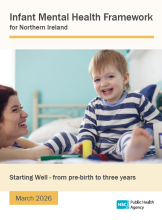
This Infant Mental Health Framework represents a commitment by the Public Health Agency, Health and Social Care Board and Trusts, as well as academic, research, voluntary and community organisations across Northern Ireland, to improve interventions from the ante-natal period through to children aged three years old.
This Insight report has been written by the National Children’s Bureau on behalf of the Public Health Agency, as part of their role to support the infant mental health agenda in Northern Ireland. The report showcases the wide range of programmes and services working to support infants and their families in Northern Ireland.
For professionals
- Healthy Child, Healthy Future (PHA)
Regional child health promotion programme, including guidance on supporting children's emotional health and wellbeing. - Health Visiting Service Guidance and Resources (PHA)
Resources to support health visitors in promoting emotional wellbeing and early intervention. - Infant Mental Health Framework (PHA)
Guidance on supporting early relationships, attachment and emotional development. - Regional Care Pathways for Children and Young People's Emotional Health and Wellbeing (PHA/HSC)
- Safeguarding Children and Young People (HSC/PHA)
Policies, procedures and practice guidance for professionals working with children and families. - Family Support Hub Network (PHA/HSC)
Information on accessing coordinated early intervention and family support services.