Who is this page for?
Public
Parents, carers and families of children and young people
- Understand common childhood illnesses and their symptoms.
- Know how to care for a child safely at home.
- Recognise signs that need urgent medical attention.
- Access trusted advice and reassurance.
Professionals
Health visitors, school nurses, GPs, pharmacists, nurses, allied health professionals, childcare and education staff
- Signpost families to consistent, evidence-based information.
- Support assessment, advice and self-care messages.
- Identify when escalation or referral may be required.
Young people
Older children and teenagers
- Understand common illnesses and symptoms.
- Learn simple self-care and prevention measures.
- Know when to seek help from a trusted adult or healthcare professional.
Other
Family members and informal carers (for example grandparents, foster carers and kinship carers)
- Recognise symptoms of common childhood illnesses.
- Understand appropriate home management and prevention.
- Know when and where to access healthcare support.
What are common childhood illnesses?
Most children will have several illnesses as they grow and develop. Common illnesses such as coughs, colds, sore throats, ear infections, diarrhoea and vomiting are usually mild and can often be managed safely at home. Remember, you know your child best. If you are worried about your child's condition, seek advice from a healthcare professional.
For children aged 0-5 years, see the Birth to Five guide for detailed information on common childhood illnesses and caring for your child at home.
How can I care for my child at home?
Many common illnesses improve on their own with rest, fluids and comfort measures.
You can:
- Encourage your child to drink plenty of fluids.
- Allow them to rest.
- Use medicines such as paracetamol or ibuprofen (if suitable for their age) following package instructions.
- Continue feeding babies as normal where possible.
- Monitor symptoms and watch for any changes.
Ask your local pharmacist for advice if you are unsure about medicines or symptoms.
What illnesses are covered in the Birth to Five book?
The Birth to Five guide provides information on common childhood illnesses and conditions including:
- Fever and high temperature
- Coughs and colds
- Ear infections and earache
- Sore throats
- Diarrhoea and vomiting
- Chickenpox
- Rashes
- Wheezing and breathing difficulties
- Sticky eyes
- Teething problems
- Constipation
- Minor bumps and bruises
For information on common childhood illnesses, caring for your child at home, and when to seek medical advice, visit the Public Health Agency's Birth to Five guide: https://www.publichealth.hscni.net/publications/birth-five
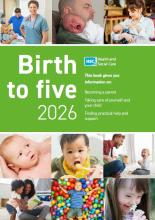
This book provides information on caring for children up to five years old and contact details for useful organisations. It is available to new parents resident in Northern Ireland through primary care services (antenatal clinics, GPs or health visitors).
When should I seek medical advice?
Contact your GP if:
- your child is not improving as expected,
- symptoms are getting worse,
- your child is eating or drinking much less than usual,
- you need advice about managing symptoms,
- you are unsure whether your child needs medical assessment.
Trust your instincts. If you are worried, seek advice.
When should I seek urgent help?
Seek urgent medical attention or call 999 if your child:
- Has difficulty breathing.
- Becomes unusually sleepy, floppy or difficult to wake.
- Has a seizure (fit).
- Develops a rash that does not fade when pressed.
- Appears pale, mottled or blue.
- Is seriously unwell or rapidly deteriorating.
If you think your child is seriously ill, seek emergency help immediately.
Where can I find more information?
- Birth to Five: Common Childhood Illnesses guide.
- Caring for a sick child | nidirect
- NHS website: Information on childhood illnesses and symptoms.
- Local pharmacy: Advice on minor illnesses and medicines.
- Health visitor or school nurse: Support and guidance for families.
For professionals
HSC Professionals
- Birth to Five (PHA) – Evidence-based resource for Health Visitors, School Nurses, GPs, pharmacists and other professionals supporting parents and carers of children aged 0–5 years.
- Routine Childhood Immunisation Programme (PHA) – Vaccination schedules, guidance and supporting resources for professionals.
- Healthier Together – Clinical pathways, safety-netting advice and parent information resources for common childhood illnesses.
- NICE Clinical Knowledge Summaries (CKS) – Evidence-based guidance on assessment and management of common childhood conditions (external).
Professional contact
- Health Visiting Service – Local Trust Health Visiting Teams for clinical advice, referral pathways and family support.
- School Nursing Service – Local Trust School Nursing Teams for advice and support relating to school-aged children.
- Primary Care Services – Local GP and Community Pharmacy networks for management and referral of common childhood illnesses.