
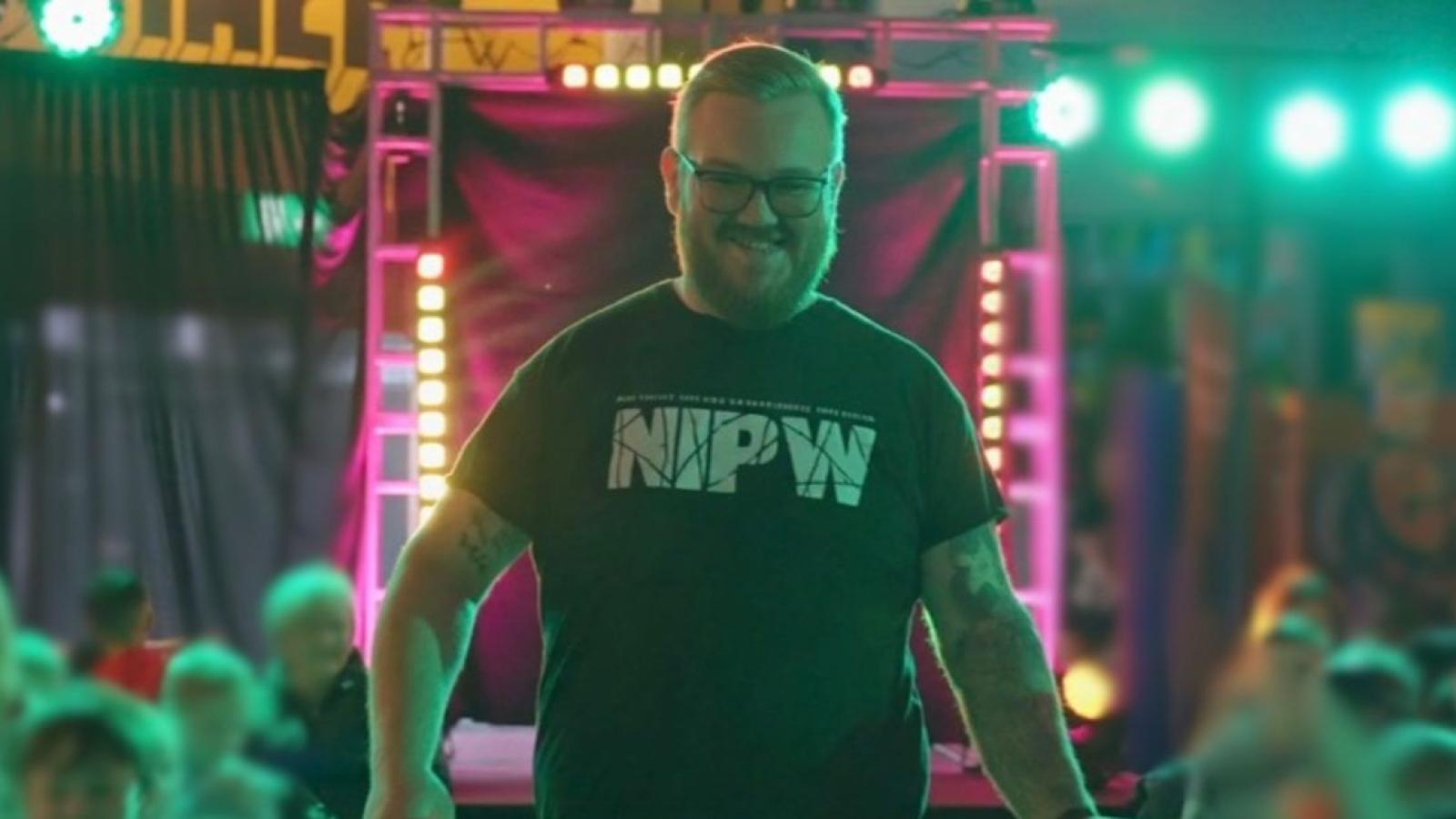
For 35-year-old Dominic Doyle, known to family and friends as Dom, life looked very different just a few years ago.
A devoted partner and father, Dom is passionate about wrestling, making people laugh and spending time with others. However, in 2020, he began experiencing severe mental health difficulties that would affect every aspect of his life.
Ahead of International Men's Day on 19 November, Dom is supporting the Public Health Agency (PHA) to highlight the importance of men's mental health and to encourage men to seek support early.
He hopes that sharing his personal recovery journey reassures others that no matter how difficult things may seem, help is available, and things can get better, telling other men: “The strongest thing a man can do is ask for help and share what you're going through because you will not be the only one”.
Dom struggled with overwhelming emotions, anxiety, and feelings of emptiness and shame, and was diagnosed with a number of mental health conditions.
"I felt like I'd lost a part of who I was," he said. "I struggled to see my own worth or purpose. I had no self-confidence and knew I wanted things to change, but I didn't know how."
The impact on his daily life was profound.
"My entire life was consumed by my mental health difficulties. I felt constant anxiety, overthought everything and carried a deep sense of shame. Even though I had two people at home who loved me, I still felt incredibly alone. Perhaps the hardest part was believing things could ever be different."
Following an attempt to take his life, Dom sought support.
"I knew I had hit rock bottom and couldn't keep going the way I was. Taking that first step wasn't easy, but it became the beginning of a journey that helped me understand myself better and realise that things could change."
Through mental health services, Dom accessed Dialectical Behaviour Therapy (DBT) and later attended the free programmes offered by South Eastern Trust’s Recovery College, where he learned practical tools and strategies to better manage his mental health.
"One of the most important things I learned was that I didn't have to believe or act on every emotion that I felt," he explained. "DBT gave me a toolbox to help manage overwhelming emotions, challenge negative thinking and respond differently to difficult situations. The Recovery College helped me rebuild my confidence and recognise my strengths."
Today, Dom says his outlook on life has been transformed.
"My relationships with my son and fiancée have never been stronger. I've rediscovered interests, found a sense of purpose and developed a real desire to help others who are struggling with their mental health. I still have difficult days, but I know how to cope with them. Recovery has shown me that my past doesn't have to define my future."
Men continue to be a key target group when it comes to suicide prevention and the need to increase awareness of the support services that are available. The latest published data show that in 2024, almost 80% of people who died by suicide in Northern Ireland were male. The figures underline the importance of reducing stigma and encouraging men to seek support when they need it.
As a man, Dom admits that asking for help was one of the hardest things he ever did: "I grew up where there was a stigma around men talking about their feelings. There was an expectation that we should be strong, keep things to ourselves and just get on with life.
"But I promise you, the strongest thing a man can do is ask for help and share what you're going through because you will not be the only one.
"To any man struggling in silence, I would say you don't have to wait until you've reached rock bottom to ask for help. You don't have to face everything on your own and opening up doesn't make you weak or less of a man."
Dr Denise O’Hagan, Assistant Director for Strategic Public Health at the PHA, said: "International Men's Day is an opportunity to highlight the importance of men's mental health and challenge some of the misconceptions that can prevent men from seeking support.
“Men often experience pressures around speaking openly about how they’re feeling. Some can view it as a sign of weakness but it is in fact a sign of strength to talk to others about feelings of low mood, anxiety and stress, and through talking things can change and get better. You can start by opening up to a friend or family member and also by reaching out for help to your GP or any of the wide range of support organisations in the community.
"Dom's story shows that recovery is possible and that getting help can have a positive impact not only for the man himself but also on their family relationships and future. For men who are parents, getting support can positively impact on the mental health and wellbeing of their children. We want men across Northern Ireland to know that they are not alone and that support is available."
Reflecting on his journey, Dom hopes his experience encourages others to take the first step.
"You don't need to have all the answers or even be able to explain exactly how you're feeling. Reaching out for support isn't a sign of weakness, it's a sign that you're willing to give yourself a chance.
"You are not your mental health difficulties. You are not alone. You deserve the opportunity to find happiness, purpose and hope again."
If you are struggling with your mental health, information about steps you can take and where to access support services near you is available at www.MindingYourHead.info, You can always speak to your GP, or contact Lifeline, Northern Ireland’s crisis helpline on 0808 808 8000. In an emergency or if there is an immediate risk to life, call 999.