There are 156 people in Northern Ireland waiting for a transplant, and UK-wide that figure is more than 8,700. Nine people die every week across the UK while waiting for a transplant that never comes.
Family consent rates in Northern Ireland have dropped from 79% in 2020/21 to 64% last year. This mirrors a UK-wide decline, from 67% to 57% over the same period. Families support donation 90% of the time when they know their loved one's decision, but this falls to around 50% when they don't, which is why registrations and conversations are vital.
New figures show more than 700 potential donations across the UK did not go ahead between April 2021 and March 2026 because families were not certain of their loved one's decision, representing around 2,127 missed transplant opportunities.
90% of people in NI support organ donation in principle, but many have not confirmed a decision, some assuming the change to an opt-out system means they don't need to act. It is important to remember that no-one is automatically added to the Register, unless you record your decision, no detail will be held for you. Donation can still only go ahead with family support, which is why a recorded, discussed decision remains essential even under opt-out.
The Public Health Agency is joining the call for one million people UK-wide who have never registered before to confirm their decision this year, and become 'One in a Million'. It takes just two minutes.
Catherine McKeown, Organ Donation Promotion Manager at the Public Health Agency, said:
"We know that families, when facing questions about organ donation, are making a decision at a moment of tremendous grief. Joining the NHS Organ Donor Register helps give your loved ones peace of mind that they're honouring your decision in the rare circumstance where donation is possible – only 1% of people will ever be in a position to donate their organs when they die. If you haven't yet registered, I'd encourage you to do so today and to talk about it with those closest to you, ensuring you leave them certain."
Sharon Millen from Waringstown has received two life-saving liver transplants, which have given her 30 years of life she may not have had, and enabled her to become a medal winner at the British Transplant Games and compete at World level. Sharon spoke about how she lives every day to make her donors and their families proud:
“When I became critically ill with acute liver failure at 18 in January 1997, my parents were told to prepare for the worst. Against all the odds, a donor liver became available and that transplant saved my life. Almost 20 years later, when my liver failed again, organ donation saved my life for a second time in November 2016.
Those two transplants haven’t simply allowed me to survive – they have allowed me to live a full and rewarding life. I’ve been able to go to university, build a career as a researcher at Queen’s University Belfast, support other transplant recipients and compete at the British and World Transplant Games. But some of the things I’m most grateful for are the simplest. I’ve had almost 30 additional years with my family and friends – birthdays, Christmases and ordinary everyday moments that I would never otherwise have had. My parents were once told they might lose their 18-year-old daughter; now, as they grow older, I’m incredibly grateful that I’m still here and able to be there for them. Organ donation made that possible.
I will never lose sight of the fact that everything I have been able to do has only been possible because of my donors and their families. Organ donors really are lifesavers. I would encourage everyone to find out more about organ donation, make a decision, register that decision on the NHS Organ Donor Register and, importantly, discuss their wishes with their family. My donors didn’t simply save my life – they gave me a life to live.”
Register your decision today at www.organdonationni.info, then talk to your family.
Ends
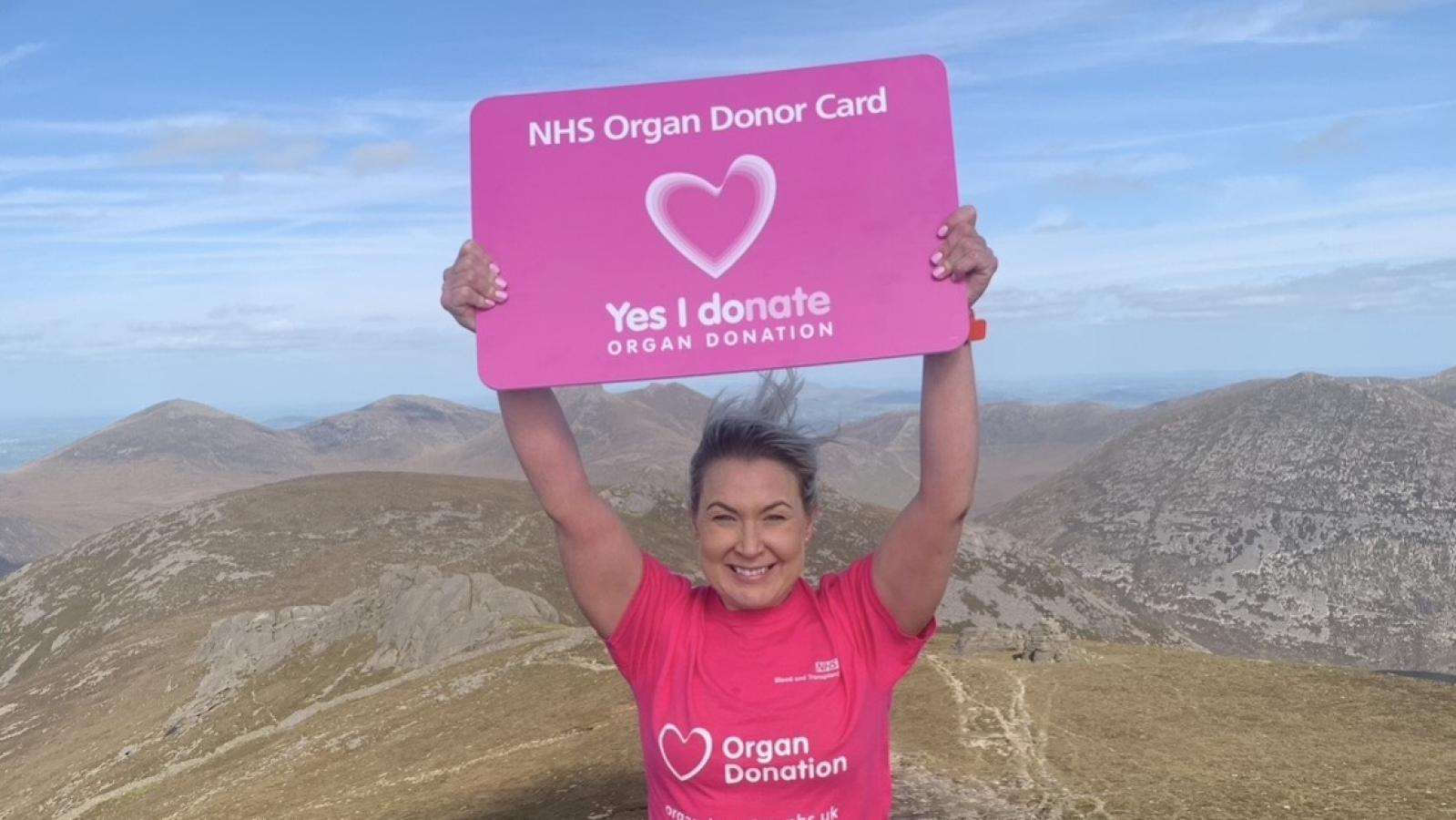
Images: Transplant recipient Sharon Millen, Sharon is also available for interview
For additional information please contact Catherine McKeown, Organ Donation Promotion Manager on 07917 514485 or catherine.mckeown2@hscni.net
- Other awareness and celebration events taking place across Northern Ireland during Organ Donation Week include a virtual Life Cycle event at Grand Central Station Belfast on 24 September, and a Slieve Donard climb on Friday 25 September.
Organ donation
- Someone in the UK will die today waiting for an organ transplant
- From 1 April to 31 July 2026, the generosity of 12 deceased organ donors and their families in NI contributed to 32 life-saving transplants across UK. Of these transplants, five resulted from donations supported under Dáithí’s Law, and 22 were enabled by donations supported by expressed opt-in decisions. All donations proceeded with the support of donor families. These figures highlight the vital impact of organ donation decisions, and the profound difference donors and their families continue to make to the lives of patients awaiting a transplant.
- Expressed opt-in decisions are where someone has explicitly told their family that they want to be a donor or have expressed a decision to donate by signing the NHS Organ Donor Register
- There were 13 cases where family did not support donation, 1 where there was an expressed opt in decision
- 20 NI residents received a deceased donor transplant (3 transplants from donors where consent was deemed, and 15 where there was an expressed opt in decision)
- Living donation: as of 4 September 2026, the UK Transplant Registry shows that between 1 April and 31 July 2026:
- There were 22 living donors in NI
- There were 18 living donor transplants to NI patients (as of 8 September 2026)
- As of 31 August 2026, 1,171,209 people (61%) in NI had signed the Organ Donor Register, the highest of the UK regions – 97% of these registrations (1,137,092) were opt-in, and 3% of total registrations (34,117) were opt-out
- As of 31 August 2026, there were 156 people in NI on the active waiting list
- Across the UK, more than 700 potential donations did not go ahead between April 2021 and March 2026 because families were not certain what their loved one would have wanted. As each deceased donor can donate an average of three organs, this represents around 2,127 missed opportunities for transplant over that five-year period.
- In June 2023, the law around organ donation in Northern Ireland changed to an opt-out system. This means in the event that organ donation is a possibility after you die, it will be considered that all adults agree to being considered as an organ donor unless they choose to opt out or are in an excluded group. The best way to opt out is by registering a decision not to donate on the NHS Organ Donor Register and by letting loved ones know. Even with the change in law, the need for family conversation and awareness of each other’s decision remains vital, as families will continue to be involved before organ donation goes ahead.
- No one is automatically added to the NHS Organ Donor Register, unless you record a decision, no details will be held for you. You can opt-in, opt-out or change your decision at any time
- It is quick and easy to register your decision on the NHS Organ Donor Register. Call 0300 123 23 23 or visit www.organdonation.nhs.uk
- Anyone can join the NHS Organ Donor Register; age and medical conditions are not necessarily a barrier to donation
- Whatever you decide, it is important talk with your loved ones to give them the certainty they need to support your decision
- Families are always involved in organ donation discussions. You can make things easier for your family by telling them what you want to happen.
- 90% of families support organ donation when they’re certain of a loved one’s decision. When they’re unsure, this drops to just 50%.
- One donor can save or transform up to nine lives through organ donation and save and transform even more by donating tissue
- Each year in Northern Ireland around 10-15 people die while awaiting a transplant
- Only 1% of people die in situations where donation is possible (in hospital in specific circumstances), therefore every donation is precious
- 90% of people in Northern Ireland support organ donation
You can become a living donor:
Across the UK, more than 1,000 people each year donate a kidney or part of their liver while they are still alive to a relative, friend or even someone they do not know. The most commonly donated organ by a living person is a kidney. Part of a liver can also be transplanted from a living donor to help someone in need of a liver transplant.
NHS Blood and Transplant
NHS Blood and Transplant provides the organ donation service for the UK. They also provide donated tissues, stem cells and cord blood. They are an essential part of the NHS, saving and improving lives through public donation.