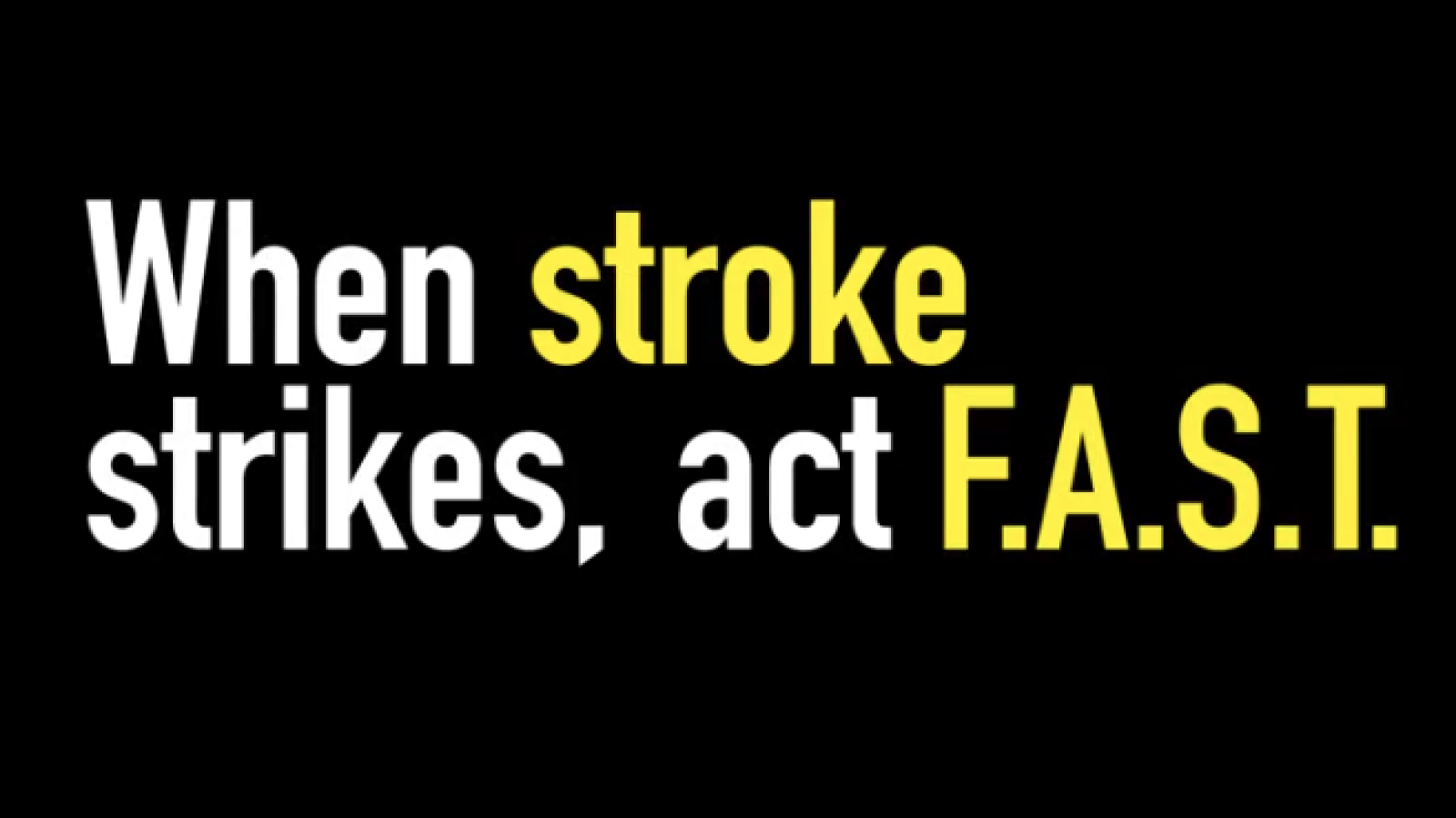
Strokes can have a significant impact on our lives and this World Stroke Day (29 October) the Public Health Agency (PHA) is highlighting the preventative measures we can take and why to act FAST.
Stroke is a major health issue in Northern Ireland with around 3,000 people admitted to hospital each year as a result of a stroke and it is important to look at some of the risk factors and the steps we can take to help prevent a stroke.
Dr Louise Herron, Deputy Director of Public Health at the PHA, said: “Stroke is an attack on the brain. It happens when the blood supply to a part of the brain is cut off and brain cells are damaged or die. Stroke is a common cause of death and disability in Northern Ireland. While the majority of strokes occur in people over the age of 65, it can strike at any age, with 25% occurring in people under the age of 65.
“In order to reduce your chances of having a stroke, it is important to be aware of the risks factors associated with it and take action to help prevent it happening.”
You can reduce your risk of having a stroke by:
- knowing and managing your personal risk factors such as high blood pressure, diabetes, atrial fibrillation (irregular heart beat) and high blood cholesterol;
- exercising regularly and maintaining a healthy weight;
- reducing alcohol consumption;
- stopping smoking.
Dr Herron added: “However, if the worst does happen and someone has a stroke, knowing the signs and symptoms and acting FAST can improve the chances of survival and reduce the level of disability that results from a stroke.”
- Face – Has their face fallen on one side? Can they smile?
- Arms – Can they raise both arms and keep them there?
- Speech – Is their speech slurred?
- Time – Time to call 999 if you see any single one of these signs.
“Stroke is still one of the biggest causes of death and disability in Northern Ireland. It is important that everyone knows and manages their risk factors for stroke, so that we can help prevent strokes happening. It is also essential that we recognise the signs of stroke and take appropriate action FAST.
“A stroke is a medical emergency that requires immediate medical attention, so recognising any sign of stroke and calling 999 for an ambulance is crucial. The sooner somebody who is having a stroke gets urgent medical attention, the better their chances of a good recovery,” concluded Dr Herron.
Find out more about strokes at www.nidirect.gov.uk/conditions/strokes
Find out more about strokes at www.nidirect.gov.uk/conditions/strokes