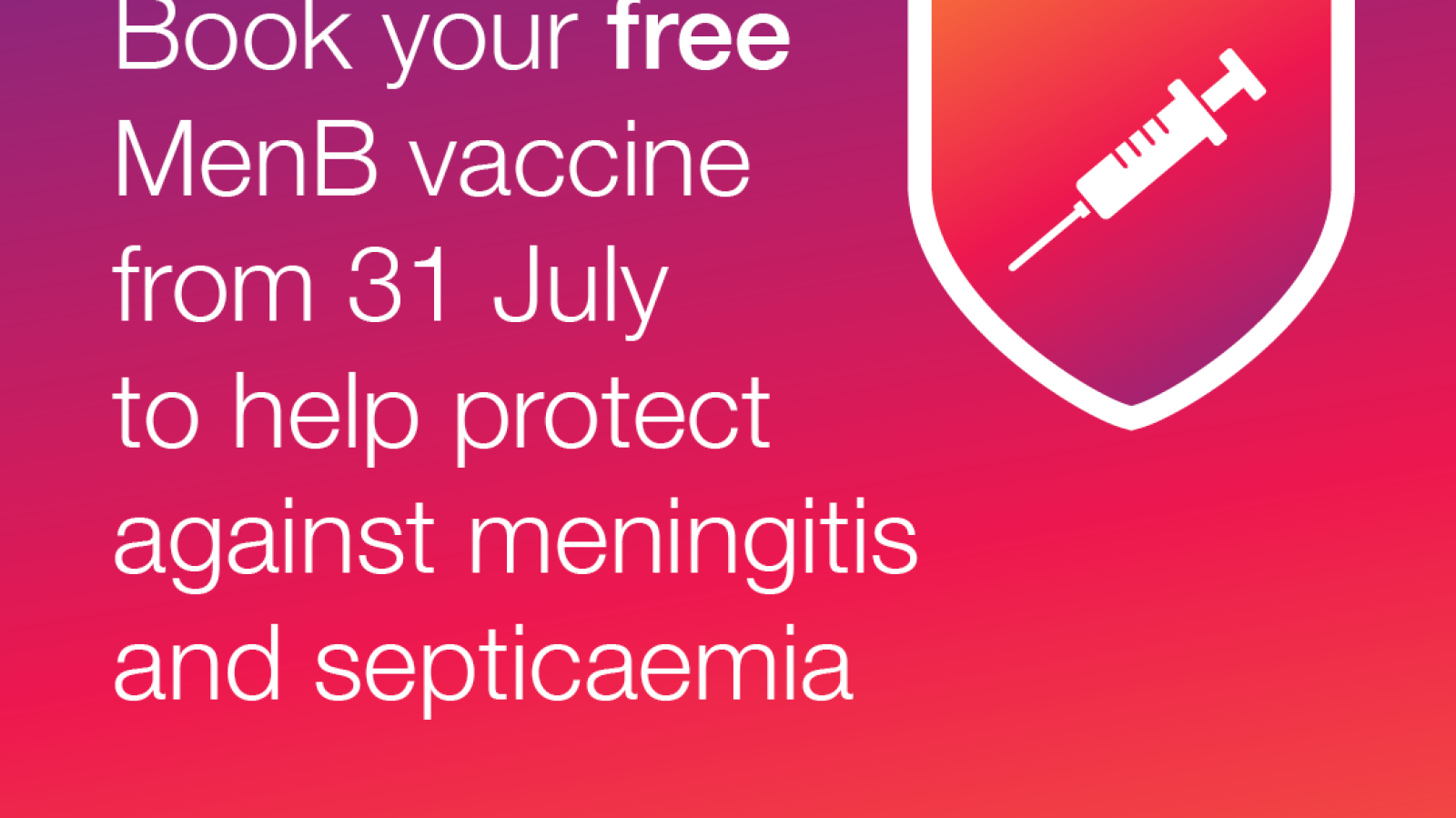
The Public Health Agency (PHA) is urging thousands of young people heading to university and further education colleges this autumn to book a potentially lifesaving free MenB vaccine when the programme begins on 31 July.
Vaccinations are being offered through GP practices and participating community pharmacies across Northern Ireland, offering protection for people born between 2 July 2007 and 1 July 2008, as well as people under the age of 25 who are heading to residential colleges or universities this autumn for the first time. Two doses of the MenB vaccine given at least four weeks apart are needed for the maximum possible protection.
Rachel Spiers, Senior Commissioning Lead for Immunisations at the PHA, said: “Meningococcal B infections can cause serious, life-threatening problems including inflammation of the lining of the brain – meningitis – and septicaemia, which is blood poisoning. This can lead to life-changing disabilities such as amputations, hearing loss and brain damage, and in some cases can prove fatal.
“The bacteria that cause MenB disease can be spread through close contact with an infected person. This can be through kissing, sharing drinks or vapes, or prolonged close contact with the person for long periods of time, such as living in the same home.
“Students in their first year of university or college have a risk that is about seven times higher than that of young people of a similar age who do not go to university. Sadly, we have seen the tragic consequences of MenB earlier this year with the outbreak in Kent so if you’re eligible, don’t leave it to chance – get vaccinated.”
Those who are eligible are:
· all people born between 2 July 2007 and 1 July 2008
· people born on or after 21 July 2001 and starting university for the first time this autumn (including international students)
· people born on or after 21 July 2001 who are starting in some residential further education colleges for the first time this autumn (including international students)
It is important you receive two doses of the vaccine 28 days apart to get the protection required.
Those eligible can get vaccinated from 31 July at their GP practice, or at a participating community pharmacy.
Health Minister Mike Nesbitt said: “MenB is a serious illness and can cause very serious health implications for those who come in contact with the illness. I would urge all those who are eligible to take up the offer of vaccination, which provides good direct protection and can help prevent serious harm caused by this disease.
“I would also ask that parents and guardians speak to their teenagers and young adults to encourage them to get vaccinated in order to help protect themselves.”
Rachel continued: “While heading off to university or college is an exciting time, the risk of MenB disease is higher as you spend lots of time with new people, often in shared living spaces, making it easier for the bacteria that cause this potentially deadly disease to spread.
“So, before you pack your bags, take a few minutes to get your MenB jabs – it’s one of the simplest things you can do to help protect yourself before starting university.
“Starting your vaccination course now gives eligible young people enough time to have the two doses required before they pack their bags for university or college, and before meningitis cases typically begin to rise in the autumn.
“Evidence from the UK infant vaccination programme shows around a 75% reduction in meningitis cases among eligible vaccinated groups.
“It is also important that students, staff and families remain vigilant for the signs and symptoms of meningitis and act fast if they suspect they may have it.”
Symptoms of meningitis develop suddenly and can include:
- a high temperature (fever) over 37.5C (99.5F);
- being sick;
- a headache;
- a blotchy rash that doesn't fade when a glass is rolled over it (this won't always develop);
- a stiff neck;
- a dislike of bright lights;
- drowsiness or unresponsiveness;
- seizures (fits).
These symptoms can appear in any order and some may not appear. Call 999 immediately or go to your nearest A&E if you think you or a friend/family member could have meningitis, septicaemia or sepsis. Trust your instincts and do not wait for all symptoms or for a rash to develop. People with meningitis, septicaemia or sepsis can become seriously unwell very quickly.
For more information on eligibility and to find out where to get vaccinated, see:www.nidirect.gov.uk/menb-vaccine
Ends
Notes to the editor
There are five main groups of meningococcal bacteria that can cause meningitis and septicaemia – A, B, C, W and Y.
Since September 2015, in Northern Ireland, young babies receive the Men B vaccine as part of the childhood immunisation programme.
In addition, the MenACWY vaccine helps protect young people against four different causes of meningitis and septicaemia: meningococcal groups A, C, W and Y disease. Only one dose of this vaccine is needed. It is given as a single injection in the upper arm. Pupils in year 11 are automatically offered the vaccine in school by the school health team, with a second chance to have it again in year 12, if they missed out the first time.Those aged 25 or under, at university for the first time and have not yet had the MenACWY vaccination, can ask their GP for the vaccine.
If you aren’t sure if your child is fully up to date with their childhood MenB vaccinations, check their red book. If your child has missed a vaccination, please contact your GP practice to book an appointment as soon as you can to make sure they have maximum protection against disease.
Key resources:
To find out more about childhood vaccines see www.pha.site/immunisation-vaccines
Further information on meningitis can be found at www.pha.site/meningitis-nidirect