Who is this page for?
This page is for anyone who is pregnant or supporting someone through pregnancy.
About healthy pregnancy
Looking after your health during pregnancy helps support your wellbeing and give your baby the best start in life. Regular antenatal care, recommended screening and vaccinations, and knowing when to seek advice all contribute to healthy pregnancy.
Antenatal screening, scans, tests
Antenatal screening
Screening tests are offered during pregnancy to try to find any health conditions that you or your baby may have.
As part of your antenatal care, you will be offered a number of blood tests. Some are offered to all women and some are only offered if it is thought that you are at risk of a particular infection or inherited condition. All of the tests are done to help make your pregnancy safer or to check that your baby is healthy.
For more information, visit:
- Antenatal screening | HSC Public Health Agency.
- Protecting you and your baby: Blood tests at your first antenatal visit and translations | HSC Public Health Agency (hscni.net)
- Protecting you and your baby: Screening tests for infectious diseases in pregnancy | HSC Public Health Agency
- Rubella and pregnancy - What you need to know (English and translations) | HSC Public Health Agency (hscni.net)
- Iron deficiency anaemia in pregnancy | HSC Public Health Agency (hscni.net)
Ultrasound scans
Most hospitals will offer women at least two ultrasound scans during their pregnancy. The first is usually around 8 to 12 weeks and is sometimes called the dating scan because it can help to determine when the baby is due. The second scan usually takes place between 18 and 20 weeks and is called the anomaly scan because it checks for structural abnormalities.
Ultrasound scans use sound waves to build up a picture of your baby in your uterus. They are completely painless, have no known serious side effects on mothers or their babies, and may be carried out for medical need at any stage of pregnancy. If you have any concerns about having a scan, talk it over with your midwife, GP or obstetrician.
Tests, scans, questionnaires
The tests – ultrasound scans, blood tests and a questionnaire – can help you make choices about care or treatment during pregnancy or after your baby is born.
Vaccinations recommended during pregnancy
| Stage of pregnancy | Vaccination |
| From 16 weeks | Whooping cough (pertussis) |
| From 28 weeks | RSV |
| During flu season | Flu |
| If eligible under the current programme | COVID-19 |
For more information, visit Pregnancy vaccinations | HSC Public Health Agency.
Key resource
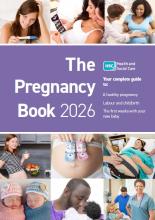
This book provides information on many aspects of pregnancy and a list of useful organisations. It is available to expectant mothers resident in Northern Ireland through primary care services (antenatal clinics, GPs or health visitors).