
Who is this page for?
This page is for parents, carers and families looking for information about childhood vaccination and immunisation in Northern Ireland.
About childhood immunisation and vaccination
Vaccines are an important way of protecting children from serious infectious diseases.
The routine childhood immunisation programmes offers vaccines at different stages, from early infancy through to school years.
Keeping your child's vaccinations up to date helps protect them from and also helps reduce the spread of infectious diseases within families, schools and the wider community.
Vaccination is one of the safest and most effective ways to protect children's health.
What is the difference between vaccination and immunisation?
The terms are used interchangeably, but they have slightly different meanings:
- Vaccination is when vaccine is given to help protect against a disease.
- Immunisation is the process of becoming protected against a disease following vaccination.
Routine childhood immunisation schedule explained
Children are offered vaccinations at different stages as part of the routine childhood immunisation programme in Northern Ireland. These vaccines help protect against serious diseases at the time children are most at risk.
| Age | Vaccines |
|---|---|
| 8 weeks | 6-in-1 vaccine (1st dose), Rotavirus (1st dose), MenB (1st dose) |
| 12 weeks | 6-in-1 vaccine (2nd dose), Rotavirus (2nd dose), MenB (2nd dose) |
| 16 weeks | 6-in-1 vaccine (3rd dose), Pneumococcal (PCV) (1st dose) |
| 12 months (1 year) | MMRV (1st dose), Pneumococcal (PCV) (2nd dose), MenB (3rd dose) |
| 18 months* | MMRV (2nd dose), 6-in-1 vaccine (4th dose) |
| 3 years 4 months | Pre-school booster (4-in-1 vaccine) and MMRV vaccine where eligible according to date of birth |
| 2 years to Year 12 | Annual flu vaccine |
*The 18-month appointment applies to children born on or after 1 July 2024
Immunisation for babies up to one year old
8 Weeks
- DTaP/IPV/Hib/HepB - 6-in-1 Vaccine (1st dose)
Protects against diphtheria (D), tetanus (T), pertussis (P; whooping cough), polio (Inactivated Polio Vaccine), hepatitis B (HepB) and Haemophilus influenzae type b (Hib), which can cause meningitis and other serious infections. - Rotavirus Vaccine (1st dose)
An oral vaccine that protects against rotavirus, a common cause of severe diarrhoea and vomiting in infants. - MenB Vaccine (1st dose)
Protects against meningococcal group B disease, a serious infection that can cause meningitis and septicaemia (blood poisoning).
12 Weeks
- 6-in-1 Vaccine (2nd dose)
Provides protection against six serious diseases and helps build long-term immunity. - Rotavirus Vaccine (2nd dose)
Completes the course needed for protection against rotavirus infection. - MenB Vaccine (2nd dose)
Boosts protection against meningococcal B disease.
16 Weeks
- 6-in-1 Vaccine (3rd dose)
Provides protection against six serious diseases and helps build long-term immunity. - Pneumococcal Vaccine (PCV) (1st dose)
Protects against pneumococcal disease, which can cause meningitis, pneumonia and blood infections.
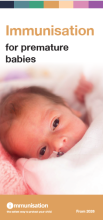
This leaflet provides information on immunisation arrangements for premature babies and has the complete childhood immunisation schedule from January 2026.
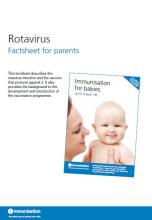
This factsheet provides information for parents on the rotavirus vaccine given to babies at two and three months old. This is more detailed than the information contained in the leaflet Immunisation for babies up to a year old.
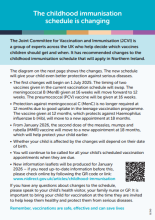
This flyer outlines the changes to the routine childhood immunisation schedule in Northern Ireland in 2025 and 2026 as recommended by the Joint Committee for Vaccination and Immunisation (JCVI).
Immunisation for babies just after the first birthday (12 months, 18 months)
12 Months (1 Year)
- MMRV Vaccine (1st dose)
Protects against measles, mumps, rubella (German measles) and varicella (chickenpox). These infections can lead to serious complications including meningitis, pneumonia and brain inflammation. - Pneumococcal Vaccine (PCV) (2nd dose)
Boosts protection against serious pneumococcal infections. - MenB Vaccine (3rd dose)
Provides longer-term protection against meningococcal B disease.
18 Months
- MMRV Vaccine (2nd dose)
Completes the MMRV vaccination course and provides the best protection against measles, mumps, rubella and chickenpox. Applicable to children born on or after 1 July 2024. - 6-in-1 Vaccine (4th dose)
Last dose that helps maintain protection against diphtheria, tetanus, whooping cough, polio, hepatitis B and Hib infection.
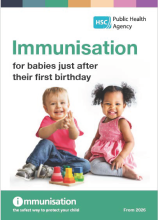
This booklet provides the facts about the vaccines babies will receive just after their first birthday and includes the complete childhood immunisation schedule from January 2026.
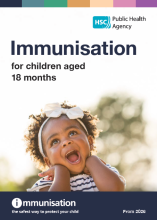
This leaflet is for parents of children due their vaccines aged 18 months and includes information on the complete childhod immunisation schedule from January 2026.
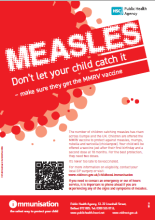
The Measles, Mumps, Rubella and Varicella (chickenpox) (MMRV) vaccination is the safest and most effective way to protect against these diseases. You need two doses of MMR to be fully protected.
Immunisation for pre-school children
Preschool vaccines administered at 3 years 4 months:
3 Years 4 Months
- 4-in-1 Pre-school Booster
Boosts protection against diphtheria, tetanus, whooping cough and polio before starting school. - MMRV Vaccine (where eligible)
Additional MMRV vaccination may be offered depending on the child's born before 31st December 2024 and previous vaccinations.
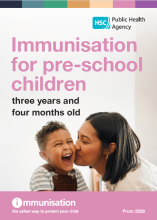
This booklet contains the facts about the vaccines given to children at the age of 3 years and 4 months.
The Measles, Mumps, Rubella and Varicella (chickenpox) (MMRV) vaccination is the safest and most effective way to protect against these diseases. You need two doses of MMR to be fully protected.
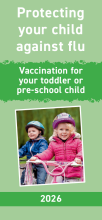
The annual flu vaccination programme includes all children aged 2 to Year 12 of secondary school (inclusive).
School vaccines
2 Years to Year 12
- Flu Vaccine (Annual)
Helps protect children against seasonal influenza and reduces the spread of flu within families and communities.
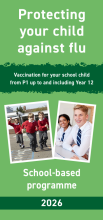
The leaflet supports the annual flu vaccination programme in Northern Ireland, which includes all children aged 2 to Year 12 of secondary school.
View all childhood immunisation leaflets in one place
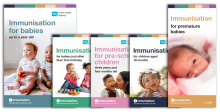
These leaflets are for parents of babies and young chidren eligible for the routine childhood immunistion programme in Northern Ireland from January 2026.
This flyer outlines the changes to the routine childhood immunisation schedule in Northern Ireland in 2025 and 2026 as recommended by the Joint Committee for Vaccination and Immunisation (JCVI).
Commonly asked questions about vaccination and immunisation
content needed [one paragraph]
Why does my child need vaccines?
content needed
Are vaccines safe?
content needed
What are possible side effects?
content needed
How do I access the vaccination programme for my child?
content needed
Keeping your child's vaccinations up to date
Check your child's personal child health record to make sure they have received all their routine vaccinations. If you think your child has missed a vaccination, contact your GP practice to arrange an appointment.
How the Public Health Agency helps
The PHA works with the Department of Health, Health and Social Care organisations, GPs, health visitors, school vaccination teams and other partners to support the delivery of the vaccination programmes across Northern Ireland.
We monitor vaccination delivery and uptake, provide trusted information and resources, and help ensure children are offered protection against vaccine preventable diseases.
Last modified
05 October 2026