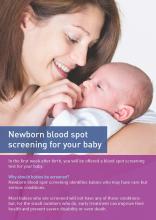
In the first week after birth, all babies in Northern Ireland are now offered screening for six inherited metabolic disorders, congenital hypothyroidism, cystic fibrosis and sickle cell disorders.
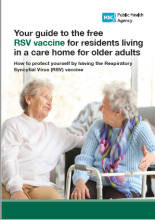
This leaflet is for people living in a care home for older adults who will be offered the RSV vaccine to protect them against Respiratory Syncitial Virus, an infectious disease of the lungs and airways that can be serious for older adults.
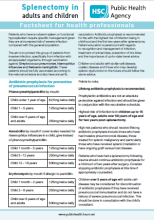
This guidance is for health professionals who deal with adults or children with no functioning spleen or splenic dysfunction and includes a suggested schedule of immunisation.
The PHA Annual report provides background information about the organisation, highlights the achievements during the 2009–2010 financial year and provides an overview of work undertaken in priority areas for each directorate.
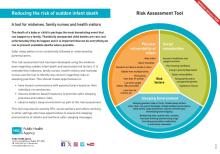
This risk assessment tool is for use by midwives, family nurses, GPs, social care and health visitors. It has been developed using the evidence base regarding sudden infant death and associated risk factors.
This leaflet encourages people over 65 and those with particular health conditions to get their pneumococcal vaccine (PPV).
This leaflet encourages uptake of the whooping cough vaccine for pregnant women. Getting the vaccine while pregnant can protect your baby. The whooping cough vaccine is now available through your Health and Social Care Trust antenatal clini
The PHA led on the planning, delivery and evaluation of the ‘Live Better’ initiative launched by the Minister for Health in July 2024.
In September 2025, facilitated stakeholder feedback workshops were held to recognise work completed, shar
3+ Review: Guidance for Pre-school Education Teachers and Leaders - Health and Education Working in Partnership to Support Pre-school Children
The Framework was developed to provide information for individuals and organisations on mental health, emotional wellbeing and suicide.
f you're concerned about your own or someone else's drinking, speak to your GP, who may refer you to a specialist agency.
There are a range of services available across Northern Ireland that provide advice and support.
Access full directory
Udated guidelines for health pofessionals on folic acid and vitamin D supplementation.
This flyer for women diagnosed with breast cancer between screening appointments. It contains important information about screening results and cancer.
This leaflet outlines the issues that women with breast implants need to be aware of when attending for breast screening.
This leaflet explains the breast surveillance screening protocol for women with a very high risk of breast cancer.
This leaflet highlights the importance of the routine childhood immunisation schedule which was revised on 1 January 2026.
Children whose immune systems don’t work as well (immunosuppression) are at serious
risk from the complications of COVID-19 infection.
Eligible children and young people who are aged 6 months to 11 years should have the
COVID-19 vaccinations.
Learning Matters Newsletter provides a method of sharing learning relating to serious adverse incidents, complaints, reviews and patient experiences across Northern Ireland.
This leaflet provides information on harm reduction services in Northern Ireland. Harm reduction services aim to help and support people who use drugs, their families and the wider community.
The Notification of Infectious Diseases (NOIDs) provides weekly updates on the number of reported infectious disease cases.
This toolkit considers how mental health is viewed in different cultures, barriers to accessing services, cultural competences in mental health, ‘dos and don’ts’ quick reference guide.
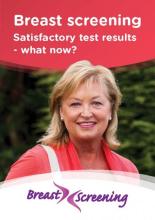
This leaflet is used to support the Northern Ireland Breast Screening Programme. It is issued to women who receive a normal result after being recalled for further tests at a breast assessment clinic.
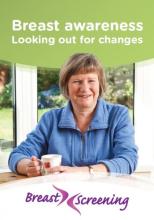
This leaflet is used to support the Northern Ireland breast screening programme and describes how women should check their breasts regularly for any changes that are new to them.
This leaflet is used to support the Northern Ireland breast screening programme and explains the additional tests that may be offered at a breast assessment clinic following a mammogram that has shown a possible abnormality.
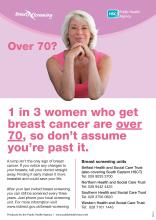
This poster provides encourages breast screening and breast awareness to women over 70. Although women over 70 are not routinely invited for breast screening, they are encouraged to call the local unit to request breast screening every three years.
Publication search
To search our publications, please use the search terms bar below to enter keywords and easily find the publications you are looking for.
Displaying 101 - 125 of 1023