
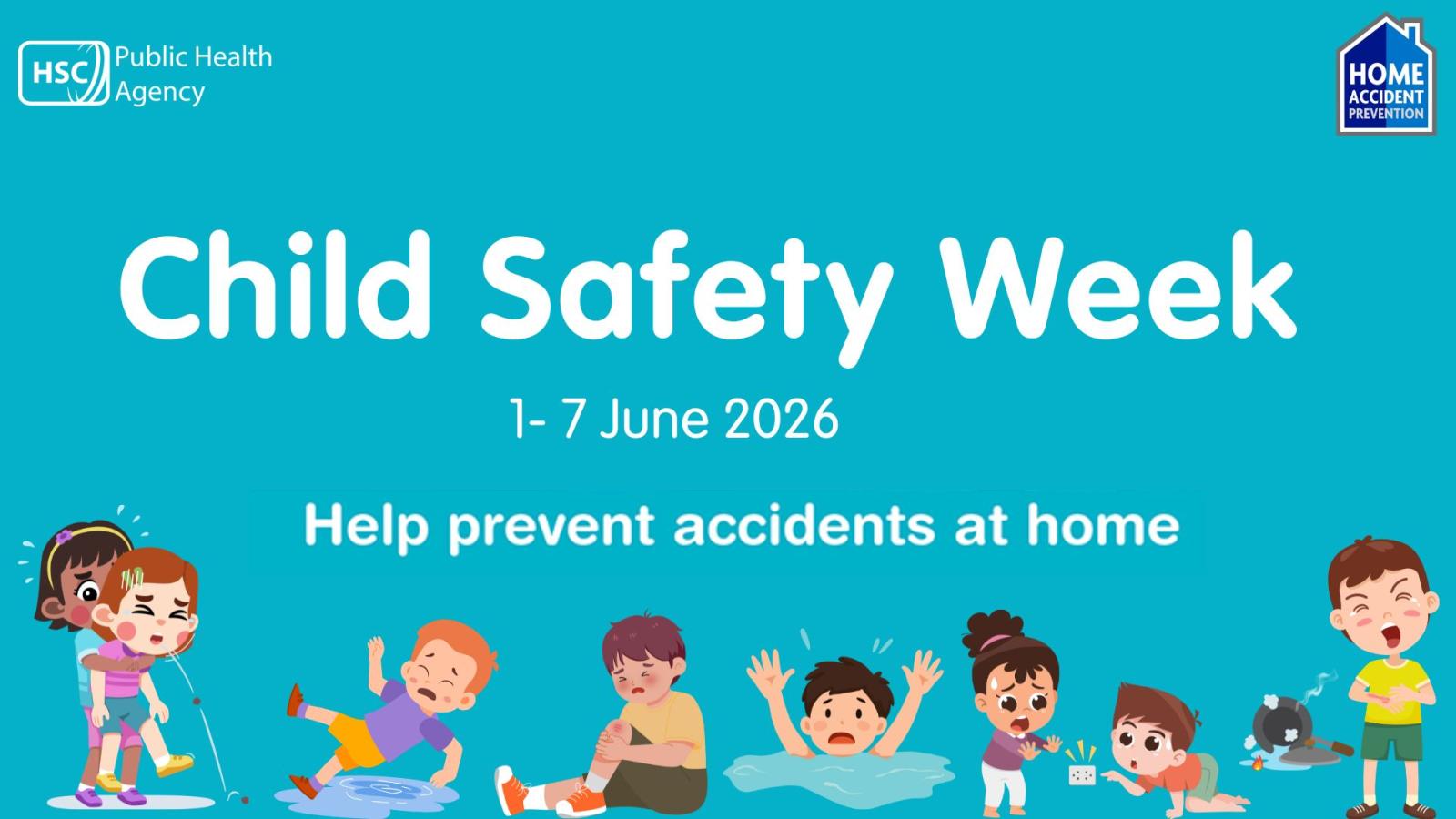
During Child Safety week (1 – 7 June) the Public Health Agency (PHA) is encouraging families to take simple, practical steps to help keep children safe at home.
The annual campaign focuses on how small, everyday actions can make a meaningful difference in reducing the risk of accidents — particularly for younger children. This year’s theme – ‘making prevention possible’ – emphasises practical steps and small behavioural changes that can significantly reduce the risk of accidents.
Unintentional injuries remain one of the leading causes of death and serious injury among children in Northern Ireland, with those under five years old most at risk. In this age group, five common hazards — choking, suffocation and strangulation; falls; poisoning; burns and scalds; and drowning — account for 90% of hospital emergency admissions.
While these risks can feel overwhelming, Child Safety Week aims to show that prevention is both achievable and effective. Often, it is small changes to familiar routines and environments that make the biggest difference.
Diane McIntyre, Lead for Health and Wellbeing Improvement at the PHA, said: “Preventing accidents doesn’t always require big changes — simple, practical steps taken every day can help protect children and reduce risks significantly.
“We know that life with young children is busy and full on, and it is impossible to supervise every moment. Creating a safe home environment can help ease that pressure. Simple steps — like keeping potential hazards out of reach or taking a quick look around — can help make everyday spaces safer for everyone.
“Small actions — like keeping hazards out of reach or checking your surroundings — can have a real impact.
“On average, two people in Northern Ireland die each week due to accidents at home. Alongside these deaths, around 17,000 people are admitted to hospital following accidents in a domestic setting — many of them young children.
“Child Safety Week provides a valuable opportunity to raise awareness among families, communities and organisations about the potential hazards in everyday life. Whether it’s a blind cord near a cot, a button battery left on a coffee table, or the risk of hot liquids; dangers can arise quickly. Taking a few moments to reduce these risks can help prevent accidents before they happen.”
Practical steps to help keep children safe:
Blind cord safety
- Examine every blind in your home. If it has a looped control cord, fit a safety device.
- Always keep cords and chains out of children’s reach
- Move cots, beds and furniture away from windows and blinds
Preventing falls and furniture hazards
- Secure televisions, chests of drawers and shelving to the wall
- Ensure rugs and mats are non-slip and secured properly
- Supervise children using climbing frames and trampolines in the garden
Button batteries and choking hazards
- Keep small objects, including button batteries and small toys, well out of reach.
- Check that battery compartments on devices are secure.
- Cut food into small pieces and keep choking hazards like nappy sacks and packaging out of reach.
Preventing poisoning and burns
- Store cleaning products and medicines in a locked or high cupboard
- Clean up any spills immediately
- Be aware of the dangers of hot drinks, appliances and bath water.
Dog and road safety
- Always supervise children around dogs, including family pets
- Teach children basic road safety – stop, look and listen – and ensure they wear reflective clothing in low light
Fire safety and supervision
- Test smoke alarms and carbon monoxide detectors regularly
- Keep children away from tools, and machinery and tidy up after DIY jobs
- Never leave children unsupervised near pools, ponds or open water.
The PHA funds the Home Safety Check Scheme, delivered by 11 local councils in Northern Ireland. It provides free home safety checks to families with children under five, older adults and vulnerable individuals. Checks include safety advice and free safety equipment, subject to assessment and availability.
For more information on how to keep your children safe in the home visit www.pha.site/childs-safety-home