
About meningitis
It has many causes, such as different germs, including bacteria, viruses, and fungi. In the UK, most cases are due to bacteria or viruses. Some of the bacteria that cause meningitis can also lead to septicaemia (blood poisoning), and both conditions can result in sepsis, which is life-threatening.
Although anyone can get meningitis, it’s most common in babies, young children, teenagers, and young adults. It needs to be treated quickly so it is important to know the signs and symptoms which can happen in any order and may not all be present.
What is meningitis? Symptoms, risks and how to protect yourself – UK Health Security Agency
Meningitis is most commonly caused by the meningococcus bacterium. It causes inflammation of the brain lining and/or septicaemia (blood poisoning). Infection can occur at any age, though the majority of infections occur in children under four years old. Teenagers are also a particularly vulnerable group.
Symptoms
Symptoms of meningitis are often non-specific and easily mistaken for other illnesses such as flu, but the disease can come on very quickly and it is important to seek urgent medical attention if you think meningitis is occurring.
Early symptoms of the disease may include:
- sudden onset of high fever;
- a severe and worsening headache without any other obvious cause;
- severe neck stiffness;
- dislike of bright lights;
- very cold hands and feet;
- drowsiness that can deteriorate so someone is difficult to wake or even unconscious;
- a rash that does not fade when pressed with a glass (this is due to bleeding under the skin).
Babies with meningococcal disease tend to be irritable when picked up and have a high pitched cry, stiff body and jerking movements.
A very important sign is a rash which does not disappear if a glass is pressed against it. If someone develops this then they need urgent medical attention. It can appear anywhere on the body so it is important to check under clothing. However the rash doesn’t always appear, so don’t wait for it to appear before seeking medical attention if other signs are present.
Key resources
This leaflet describes the MenB vaccine available to eligible young people this autumn 2026.
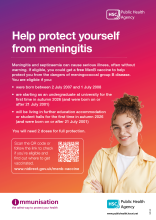
This poster outlines who is eligible for the free MenB vaccine against meningitis and septicaemia this autumn 2026.
This leaflet encourages people over 65 and those with particular health conditions to get their pneumococcal vaccine (PPV).
Last modified
07 October 2026