This Northern Ireland Alcohol Awareness Week (15–21 June), a collaboration between the PHA and Northern Ireland’s five Drug and Alcohol Connections Services, people are being encouraged to get to know the alcohol units in their drink, consider reducing the amount they are drinking, and choose an alternative to alcohol, under the theme of ‘better choices’.
The aim of the week is to help ensure that everyone has a better understanding about alcohol harm, the associated health risks of drinking too much, and encouraging people to think about how alcohol fits into their lives. The campaign will also highlight how making small changes could improve your overall health and wellbeing.
Stephanie Hanlon, Regional Lead for Drugs and Alcohol at the PHA, said: “The risk of developing serious illnesses such as heart attack, stroke and certain cancers increases with the more alcohol we drink on a regular basis. Many people may not realise they could be drinking more than the safer limits set out by the Chief Medical Officers, which could be affecting both their physical and mental health.
“It is easy to forget that alcohol is a powerful drug and, like any drug, it can have a significant impact on our health and wellbeing, and that of our friends and families.
“By making small changes to your drinking habits you can begin to reduce those risks. We’re asking people to think about what they may be pouring when they’re at home, as we can tend to free-pour a larger measure than one we would get if at a bar or restaurant. It’s also easy to reach for a ‘just one more’ can or bottle and forget about how much we’re drinking. Simple steps such as keeping track of your drinks and then making the move to drinking a bit less by introducing a non-alcohol drink like a soft-drink or a zero percent alcohol alternative can help reduce alcohol intake.”
Connections Services, based in each of the five local Health and Social Care Trust areas, will be working in communities to promote the campaign through existing PHA-funded programmes, community groups and clubs, and running NIAAW-related activities in shopping centres, supermarkets, community centres and leisure facilities.
The most recent statistics show the total number of alcohol-specific deaths registered in 2024 was 397. The PHA is encouraging people to take a look at how drinking may be impacting their lives, particularly men, as almost 65% of the alcohol-related deaths registered that year were male.
To keep health risks from alcohol to a lower level, it is safest not to drink more than 14 units of alcohol a week, which can be as little as four to six pints of beer, depending on its strength, or six 175ml glasses of wine. It’s best to spread consumption out over three or more days and to have several alcohol-free days each week.
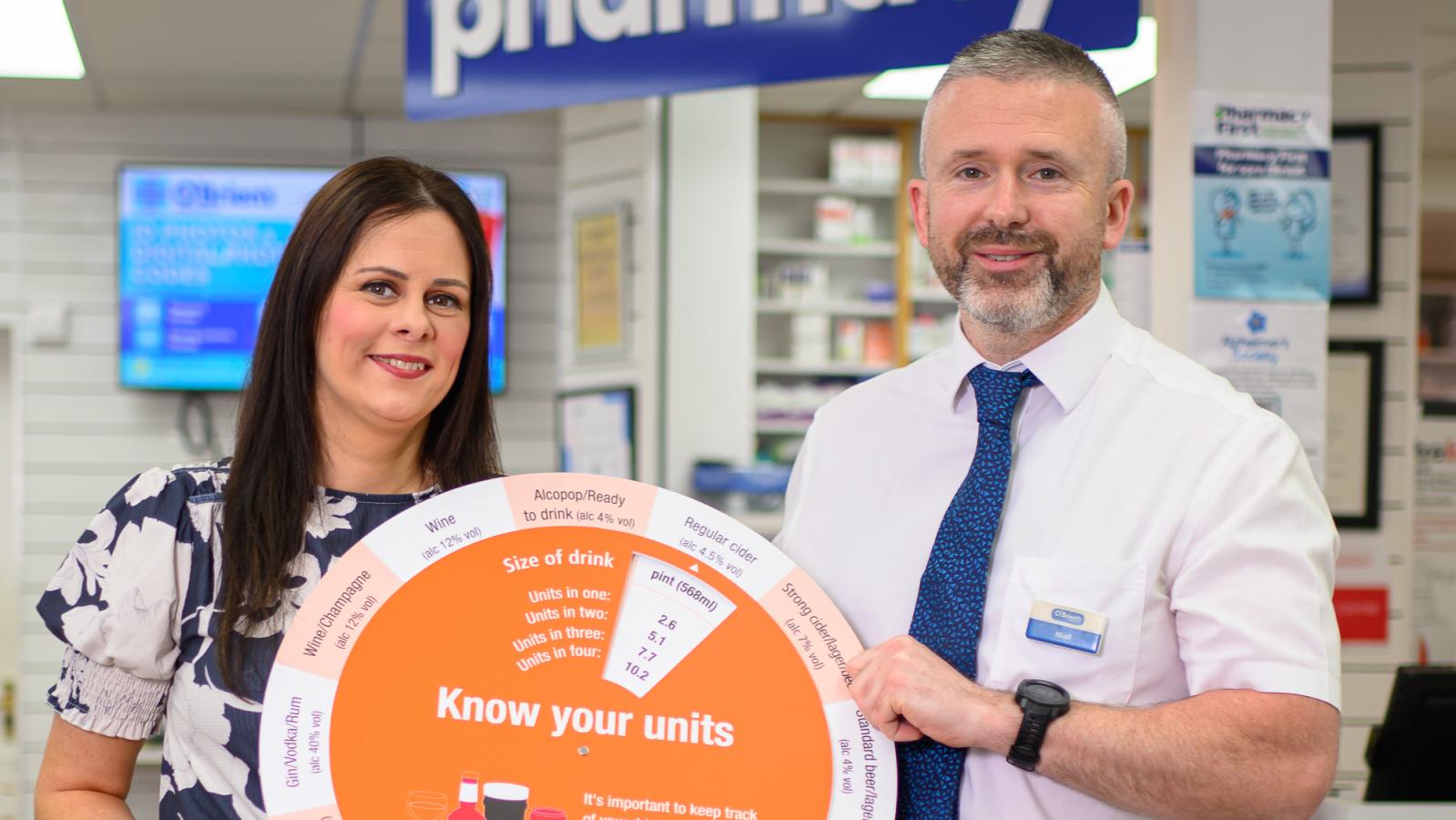
Throughout June and July as part of the Living Well programme, the PHA is running the ‘Know your units’ campaign in collaboration with community pharmacies. It aims to increase awareness of the drinking guidelines developed by the UK Chief Medical Officers (CMOs) to help people understand the risks alcohol may pose to their health and start to make healthier choices.
Niall O’Brien, Community Pharmacist from O’Brien’s pharmacy, said: “Understanding alcohol units is an important step in keeping track of how much you drink and making informed choices about your health. If you regularly drink up to 14 units a week, it is best to spread this over three or more days. If you want to cut down, try building in several drink-free days each week.
“Community pharmacy is well placed to support people in looking after their health. Pharmacy teams can provide advice, raise awareness of the risks linked to drinking too much alcohol, and help people find the right support. Call in to your local pharmacy to find out how we can help.”
Stephanie concluded: “Aside from the health impacts, we need to be aware of the effect of alcohol use on those around us. It can damage relationships and affect our judgement, leading us to do things we wouldn’t otherwise do and that we might regret later.
“By understanding how much we drink and by making better and more informed choices, we can all take positive steps forward. Even small changes to drinking habits can help people improve their overall health and wellbeing.”
If you are concerned about your own or someone else’s drinking, speak to your pharmacist or GP.
More information on support services can be found at www.DrugsAndAlcoholNI.info
To find out what is happening in your local area during NIAAW contact your connections service at www.drugsandalcoholni.info/contact-us
- In the 2024/2025 Northern Ireland Health Survey, around three quarters (76%) of adults aged 18 and over reported that they drank alcohol and around four fifths of males (79%) and three quarters of females (73%) were drinkers. Male drinkers (16%) were twice as likely as female drinkers (8%) to report drinking on three or more days per week.
- The survey also reported that 46% of drinkers, drinking most of their alcohol at home
- The health survey can be found at www.health-ni.gov.uk/news/health-survey-ni-first-results-202425
- As part of the Living Well campaign, community pharmacies across Northern Ireland are offering a free information leaflet, ‘Focus On Alcohol’ and unit calculator wheel, to members of the public. A copy of the ‘Focus On Alcohol’ resource can be found at www.pha.site/FocusOnAlcohol