Calling all healthcare professionals – pertussis in pregnancy webinar
The PHA, in conjunction with CEC, is hosting a webinar to promote awareness amongst healthcare professionals of the pertussis (whooping cough) vaccination programme for pregnant women. Uptake of pertussis vaccination has fallen over recent years.
Pertussis (whooping cough) update
Pertussis (also known as "whooping cough") in Northern Ireland monthly updates. Pertussis is a highly contagious, but vaccine preventable bacterial respiratory disease that is usually caused by Bordetella pertussis.
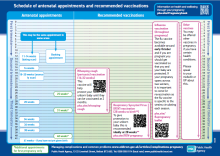
This flyer provides information on antenatal appointments and recommended vaccinations for pregnant women.
This booklet provides guidance for professionals on the childhood immunisation schedule from January 2026.
This factsheet provides information and encourages uptake of the whooping cough vaccine for pregnant women. Cases of whooping cough are on the increase – by getting the vaccine while pregnant you can protect your baby.
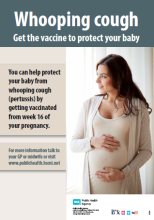
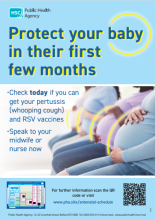
This poster encourages uptake of the whooping cough vaccine for pregnant women. Cases of whooping cough are on the increase – by getting the vaccine while pregnant you can protect your baby.
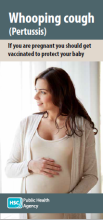
This leaflet encourages uptake of the whooping cough vaccine for pregnant women. Getting the vaccine while pregnant can protect your baby. The whooping cough vaccine is now available through your Health and Social Care Trust antenatal clini
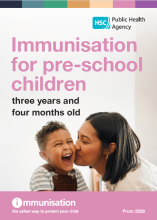
This booklet contains the facts about the vaccines given to children at the age of 3 years and 4 months.

Displaying 1 - 9 of 9