
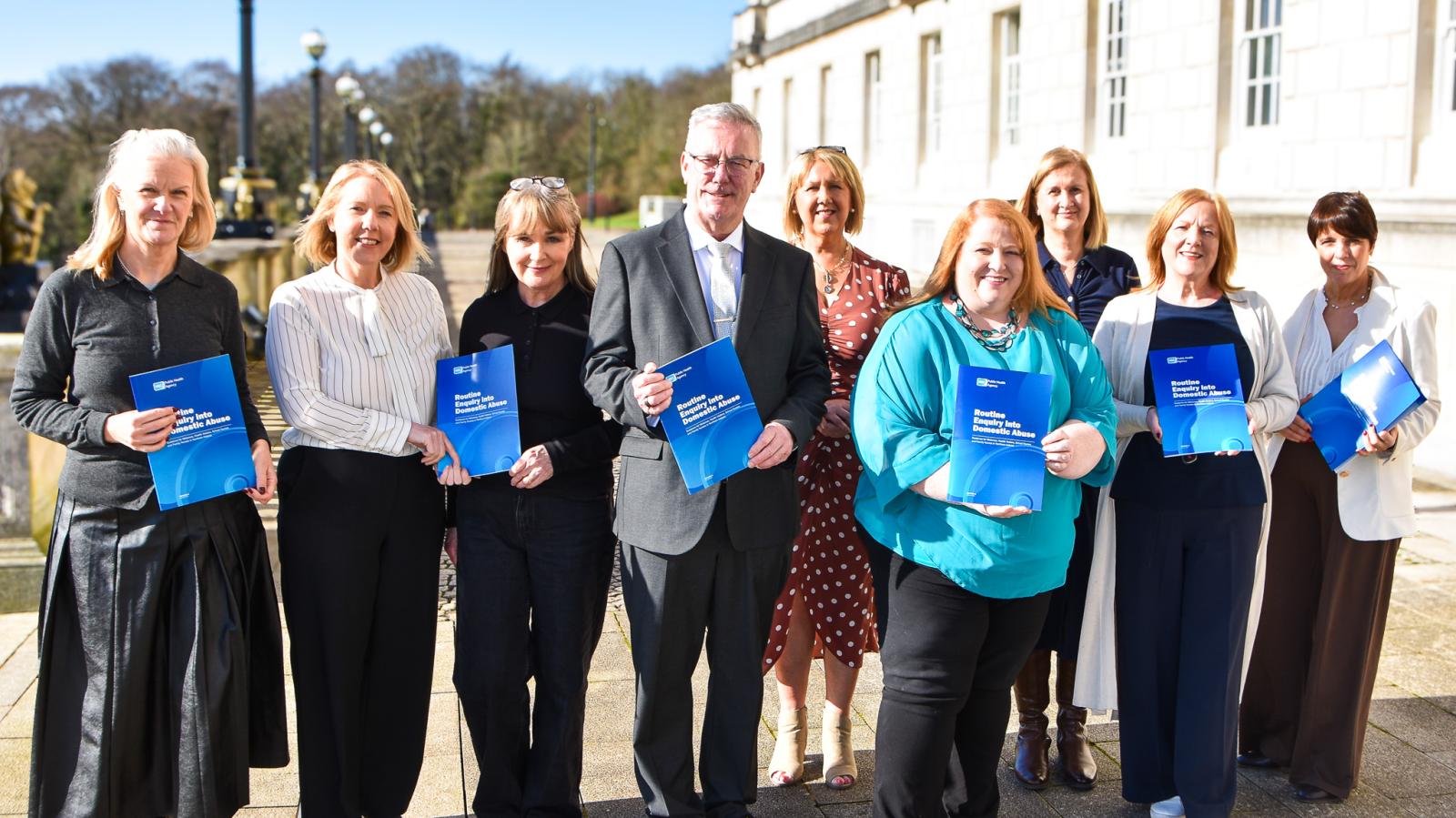
Regionally consistent guidance has been published to assist midwives, health visitors, school nurses and family nurses to identify and respond to incidents of domestic abuse.
The Routine Enquiry into Domestic Abuse Guidance was jointly launched ahead of International Women’s Day on 8 March by both Health Minister Mike Nesbitt and Justice Minister Naomi Long.
Routine Enquiry (RE) involves asking all women about domestic abuse, regardless of the presence of any indicators, and has been offered in pregnancy and postnatally by healthcare practitioners since 2006. It aims to identify women with experience of domestic violence and abuse so they can be offered supportive interventions including information, safety planning and referral.
This regional guidance document follows a Public Health Agency (PHA)-led review aimed at strengthening and broadening the Routine Enquiry process. The review included a service evaluation and engagement with survivors of domestic abuse, facilitated and supported by organisations including Women’s Aid, the Rowan Centre and the Department of Health.
Health Minister Mike Nesbitt said: “The Domestic and Sexual Abuse Strategy (DSA), jointly launched by my Department and the Department of Justice in 2024, provides a vision for Northern Ireland as a place where domestic and/or sexual abuse is not tolerated, and everyone can be safe and free from fear.
“A key deliverable is that domestic and/or sexual abuse is identified and responded to earlier. This guidance document aligns with that commitment as it aims to improve and standardise care provided to families who may be experiencing domestic abuse through early identification and intervention.
“The guidance was developed in consultation with key stakeholders across the five geographic Health & Social Care Trusts, reflects the findings of the PHA review and crucially, is informed by the recommendations of those with lived experience of domestic abuse.”
Justice Minister Naomi Long said: “I wholeheartedly welcome the publication of this guidance for nurses.
“The nature of domestic abuse requires a unique approach, as it is associated with fear and control, and I recognise the important role that nurses, midwives and other health and social care professionals, as first responders, can play in identifying abuse and supporting victims.
“Opportunities for victims to safely share information on what they are experiencing can open a door to help and to justice. This guidance will support the nursing profession by providing the information needed to help them respond appropriately and bring more victims into safety.
“We must all work to ensure that when anyone comes forward to report abuse they receive the right response; have access to guidance, protection and support; and are clear about their options.
“I am delighted that this guidance has been developed through collaboration including by listening to victims about their experiences.”
The guidance aims to:
- Provide a consistent regional approach when enquiring about and responding to suspicion of domestic abuse;
- Reduce the impact of domestic abuse for those experiencing it, including children, through early identification and appropriate intervention;
- Increase the knowledge, skills and confidence of nurses and midwives to identify and manage issues relating to domestic abuse and to support and assist survivors to make informed choices about their well-being and safety;
- Ensure nurses and midwives contribute effectively to safeguarding both children and adults through implementation of this policy.
Emily Roberts, Interim Director of Nursing at the PHA, said: “Domestic abuse has a damaging and lasting impact on the lives of adults, children and young people right across Northern Ireland. It is prevalent in every community and can affect people of all ages, socioeconomic status, sexual orientation, gender identity, race or religion.
“This guidance will help equip organisations, midwives, health visitors and family nurses with the understanding, awareness and training to ask the right questions and respond appropriately to help address domestic abuse.”
Access the guidance here: Routine Enquiry into Domestic Abuse: Guidance for Midwives, Health Visitors, School Nurses and Family Nurses in Northern Ireland | HSC Public Health Agency.
Notes to editors:
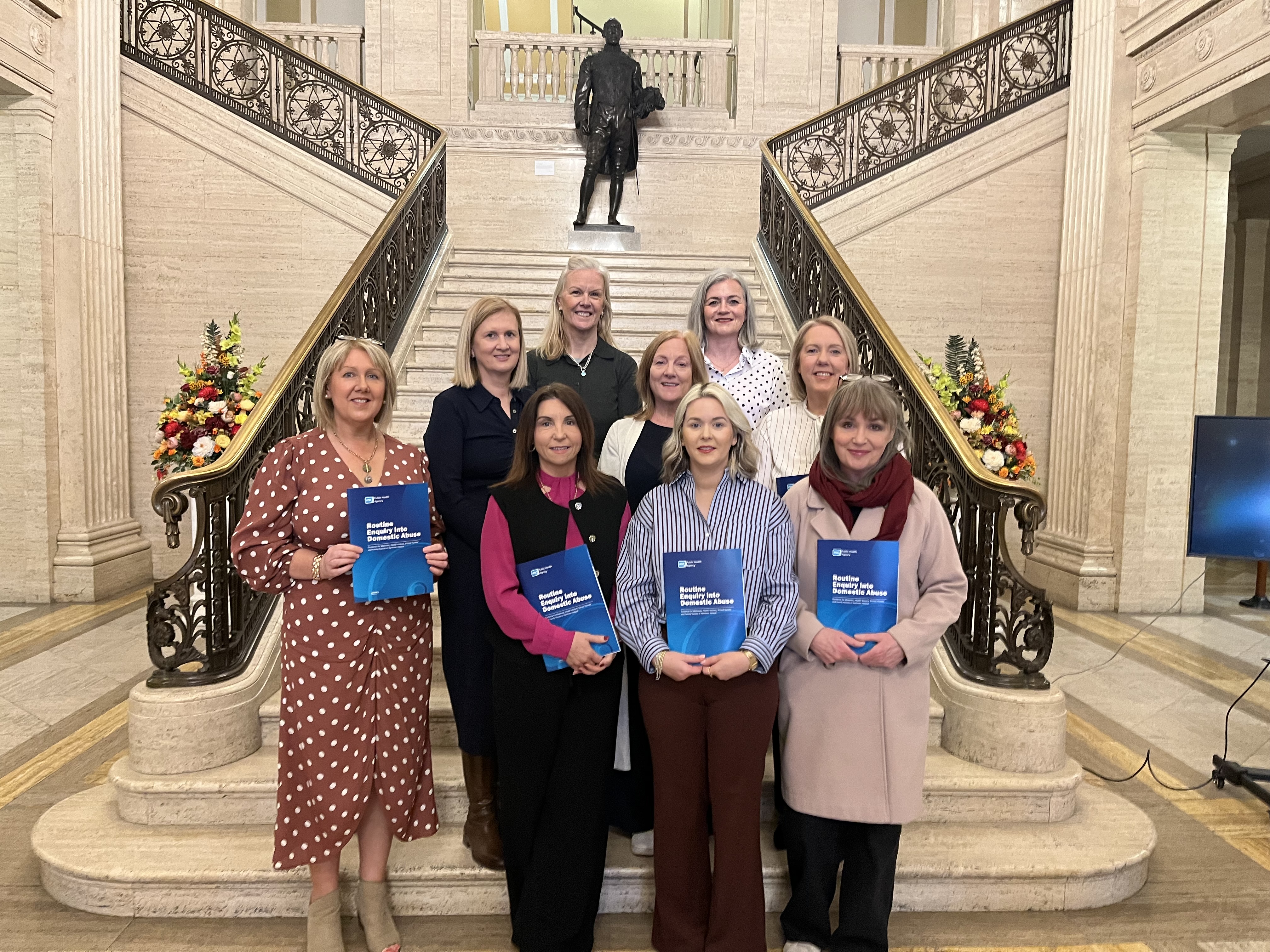
- Photo caption: L-R Sonya McMullan, Women’s Aid Federation; Maureen Ritchie, DoH; Catherine Magennis, PHA; Health Minister Mike Nesbitt; Amanda Mairs, NHSCT; Justice Minister Naomi Long; Sonia Glendinning, DoH; Amber McCloughlin, PHA; Martina Moore, DoH.
- Information sessions to raise awareness of the guidance among relevant staff will be delivered throughout March. Existing training programmes are currently being revised and will commence delivery from April to September 2026.
- In 2006, the Department of Health directed that Routine Enquiry for domestic abuse is carried out for all pregnant women (regardless of race, ethnicity and ability) including women who have experienced miscarriage or stillbirth.
- Learning from local internal review processes highlighted the need to regionally review the practice of routine enquiry in NI. The guidance is designed to support practitioners in identifying and responding to domestic abuse and should be read in conjunction with regional and Trust policies on safeguarding adults and children.
- The guidance states that Routine Enquiry should be completed by midwives and health visitors at every core Healthy Child, Healthy Future contact if it is safe to do so. This includes:
- Same sex couples;
- Foster carers.
Routine enquiry should be completed by school nurses during targeted home visits and at any time that the Family Health Assessment (FHA) is being updated, including the P1 health appraisal if the parent is present. Family nurses should complete the Family Nurse Partnership Intimate Partner Violence (FNPIPV) pathway with each of their clients.