
Obesity is one of the most significant public health challenges facing Northern Ireland, with one in five children and over two thirds of adults living with overweight or obesity here. While it is often talked about as a matter of personal responsibility, evidence shows that obesity is strongly shaped by the environments people live in – including access to affordable food, transport, housing, education, green space and local services.
Emily Roberts, Interim Director of Nursing, Midwifery and AHP at the Public Health Agency (PHA), said: “A Whole Systems Approach is essential to improving population health and reducing health inequalities –it recognises that no single organisation, policy or individual action can solve the issue on its own. Instead, it focuses on how different parts of society work together – from local councils and health services to planners, transport providers, schools, employers and community organisations – to influence everyday health.”
In practice, a Whole Systems Approach means:
- Designing places, services and policies that make healthy choices easier and more accessible
- Aligning decisions across sectors such as planning, transport, housing, education and health
- Addressing the root causes of obesity, including inequality, disadvantage and environments that limit choice
- Shifting the focus from blame towards prevention and collective responsibility
Emily Roberts, continued: “High levels of obesity are a result of environments that do not support people. A Whole Systems Approach fundamentally changes how we respond – moving away from blame and individual responsibility, and towards prevention and collective action.
“Vulnerable groups are more affected and inequalities mean people can be impacted based on where they are born and live, their ethnicity and employment opportunities. By understanding how social, economic and environmental factors influence healthy weight across the life course, a Whole Systems Approach allows us to design policies, places and services that work for people where they are, reduce health inequalities, and create healthier, fairer communities across Northern Ireland.”
Lived experience is a critical part of understanding how systems affect health in practice. Among those is Fiona Quigley, who has lived with obesity from a young age, and is sharing her perspective on why a Whole Systems Approach is essential.
“I have lived with obesity from a very young age, and I’ve seen that what I have experienced isn’t just personal – it reflects the world around us,” Fiona said.
Fiona Quigley.
“The environments we live in have shifted – the food around us, the way our towns and transport are set up, and even our day to day lives. For many people, it has become harder, not easier, to live a healthy life. But the way we talk about obesity has not really caught up. We still frame it as an individual issue – eating less, moving more, trying harder. And when that doesn’t work, people are left feeling blamed, judged, or like they’ve failed.”
A Whole Systems Approach challenges this narrative by asking different questions: what barriers exist in people’s daily lives, what helps or hinders healthy choices, and how systems can be designed to support health more fairly.
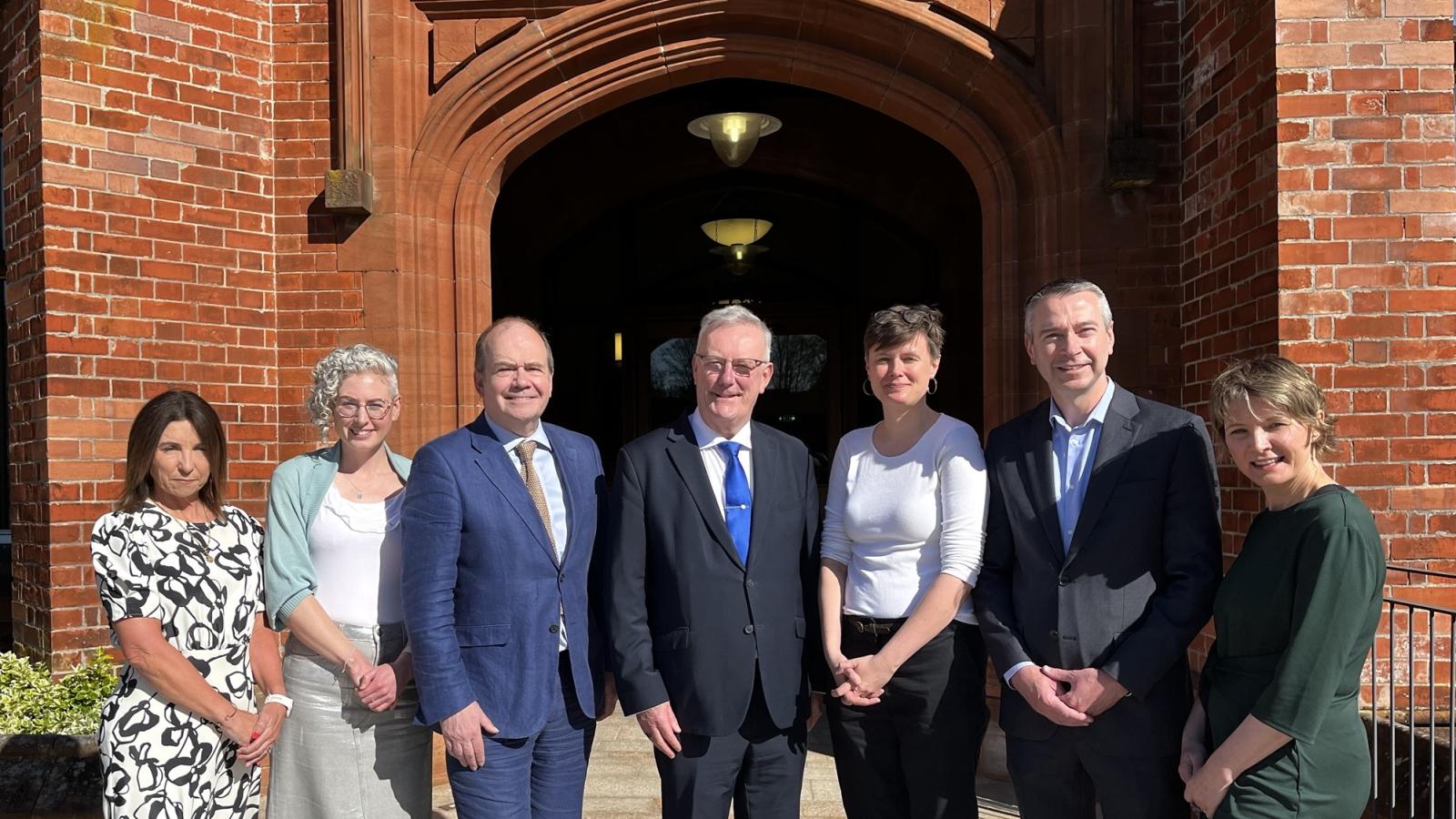
This shared learning was supported through an event hosted in Belfast this week by NIHR PHIRST, with support from the PHA. The event brought together policy leaders, local councils and researchers to share learning on implementing a Whole Systems Approach to obesity prevention. It featured a keynote on Northern Ireland’s Healthy Futures Strategy, practical insights from early‑adopter councils, and strategic perspectives from a UK‑ and Ireland‑wide expert panel including PHA, Public Health Wales, Public Health Scotland, the Health Service Executive and Leeds Beckett University. The event also marked the launch of the Northern Ireland evaluation findings and recommendations, alongside a briefing report for practitioners and policymakers developing Whole Systems Approaches, produced by Queen’s University Belfast and the University of Hertfordshire. Opening the event, Mike Nesbitt, Minister for Health, highlighted the importance of Whole Systems Approach to address healthcare inequalities: “I was delighted to attend this event to raise awareness and spark discussion on approaches to tackling obesity and the importance of maintaining a healthy weight.
“We are seeing long term challenges with the harm related to living with obesity in Northern Ireland, and in particular, health inequalities in both adults and children.
“Last month, my Department published the Health Inequalities Annual Report, which highlighted that in 2024/25, the percentage of Primary 1 pupils affected by obesity in the most deprived areas was 73% higher than the rate in the least deprived areas. For Year 8 pupils, the most to least deprived gap was wider at 87%. This is not fair, and we all must do more to tackle the issue of health inequalities.
“Through the Healthy Futures Framework I recently launched, my Department and Health and Social Care (HSC) is committed to working together with stakeholders, such as local councils and other Government Departments, to turn the curve on obesity rates in Northern Ireland and improve health outcomes for all.”
At the event, Fiona’s story reflected how systems‑level change has succeeded before – and can do so again: “If the path is so full of barriers to health, we can’t just ask the individual to try harder – we have to change the path,” she said.
“We’ve seen this before with smoking. We didn’t just tell people to stop; we changed laws, social norms, education and support. We need that same collective thinking when it comes to obesity prevention.
“Health should not be something you have to fight your environment to change, it should be something your environment supports you to naturally achieve.”
For more information on WSA, visit: www.makinglifebettertogether.com/healthier-systems-4-healthier-weight/