With students returning home over Easter break, the Public Health Agency (PHA) is highlighting it as an opportunity to make them aware of the signs and symptoms of meningitis and to check that they have had their MenACWY vaccination.
There is no increased risk to the population in Northern Ireland from the meningococcal disease outbreak recently reported in Kent, England. However, this incident highlights that it is important for everyone to be aware of the signs and symptoms of meningitis and the steps to take if they are concerned, in addition to getting vaccinated against the strains covered by the programme. The MENACWY vaccine helps protect against four types of bacteria linked to meningitis.
Dr Jillian Johnston, Consultant in Public Health at the PHA, said: “Meningitis can occur at any time of year, but is seen most frequently in the winter. It is a serious disease, so it is vital everyone becomes more vigilant and makes themselves aware of the signs and symptoms of the condition, as a rash is not the only sign to be aware of.
“The symptoms are often non-specific. In the early stages it could be mistaken for other illnesses such as flu, although with meningitis the person tends to be sicker than with these other conditions. However, the disease can develop very quickly and it is important to seek urgent medical attention if you think meningitis is a possibility.”
Meningitis is inflammation of the lining around the brain and spinal cord (the meninges) and is usually caused by bacteria or a virus. Bacterial meningitis is rarerbut more serious than viral meningitis, and can lead to septicaemia (blood poisoning), and result in life-changing disabilities such as amputation, hearing loss, brain and nerve damage, and sadly in some cases, death. The bacterium Neisseria meningitidis is a major cause of meningitis and septicaemia worldwide.
Meningococcal infection doesn’t spread very easily. The bacteria can generally only be passed to others after a long period of close contact, for example living with someone in shared accommodation or through prolonged kissing. While meningococcal disease can affect all ages, recent outbreaks have shown that older children, teenagers and young adults, particularly those in shared settings such as schools, colleges and universities, can be affected. However the highest rates remain in the under fours and, especially the very young.
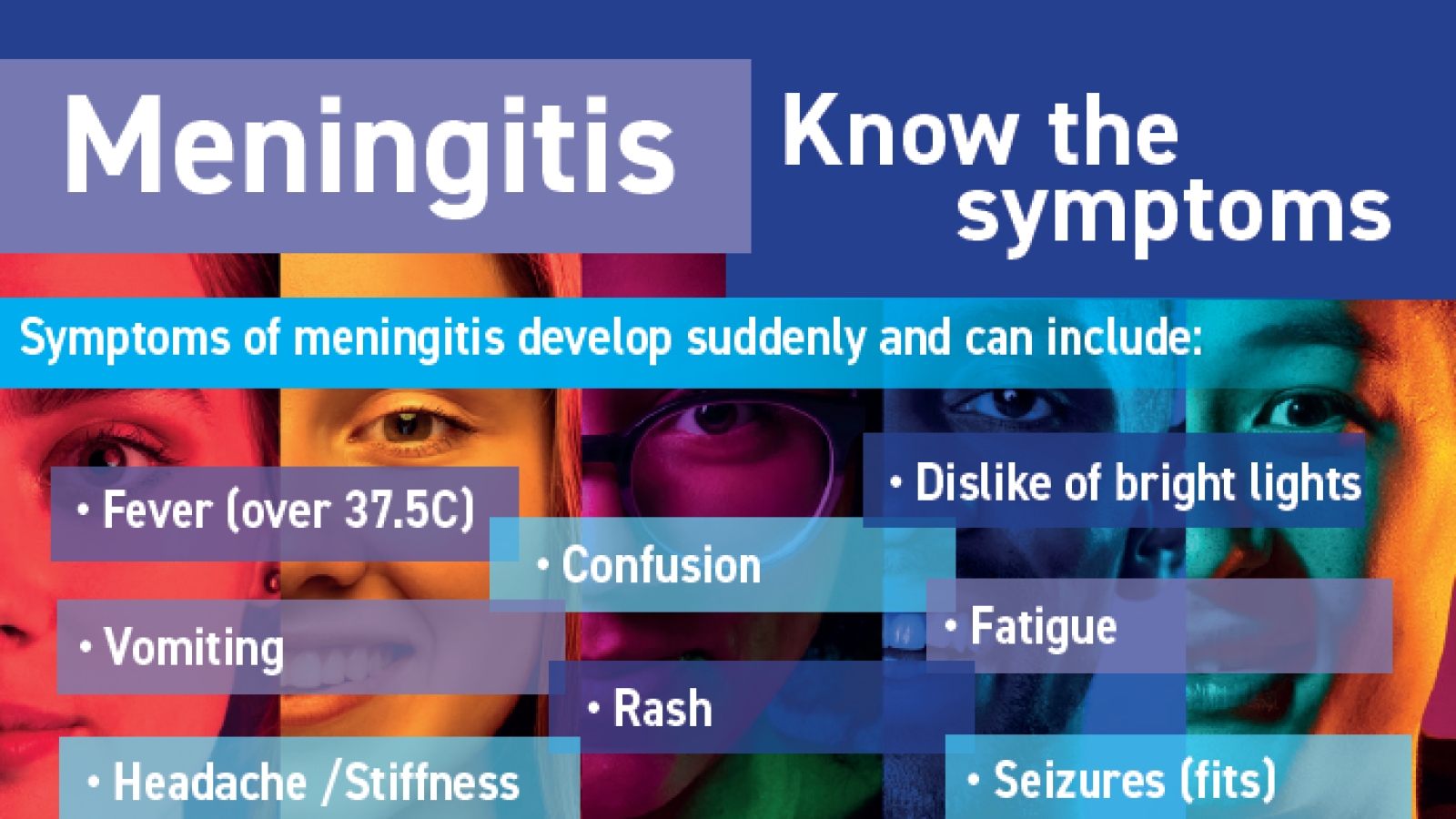
Early symptoms of the disease may include:
- fever, cold hands and feet;
- vomiting and diarrhoea;
- drowsiness, difficult to wake up;
- irritability and/or confusion;
- dislike of bright lights;
- severe headache;
- pale, blotchy skin with or without a rash;
- convulsions/seizures;
- stiff neck.
Dr Johnston continued: “A very important sign is a rash that does not disappear if a glass is pressed against it. If someone develops this, they need urgent medical attention. It can appear anywhere on the body so it is important to check under clothing. However, a rash doesn’t always appear when someone has meningitis, so don’t wait for a rash before seeking medical attention if other signs are present.”
If you become worried about yourself, your child, or a friend, particularly if symptoms are getting worse, always seek medical help urgently. If you have symptoms of meningitis, call 999 or go to an Emergency Department straight away. If someone goes to bed unwell, check on them regularly.
National immunisation programme
The national immunisation programme is the most effective way to prevent many infectious diseases including some strains of meningococcal disease which can cause meningitis and septicaemia. Vaccines teach your immune system how to create antibodies that protect you from diseases and once your immune system knows how to fight a disease, it can often give you lifelong protection.
MenACWY
Pupils in year 11 and 12, are offered the MenACWY vaccine in school. The vaccine helps protect young people against four different causes of meningitis and septicaemia: meningococcal groups A, C, W and Y disease. If you’re aged 25 or under, at university or further education college and haven’t yet had the MenACWY vaccination, you should ask your GP for the vaccine.
MenB vaccine
The MenB vaccine was introduced in 2015 and is given at two and four months and just after the first birthday and protects against Meningococcal B disease, the most common type of meningococcal disease. All infants are eligible for the meningococcal B vaccine up until they are 2 years of age.
Dr Johnston concluded: “If your child has missed a vaccination or if you are not sure if they are up to date with their vaccines, please contact your GP practice to book an appointment. The school-based vaccination programme, which includes the MenACWY is also continuing, so don’t forgot to sign and return consent forms when you receive them.
“There are other types of meningitis that there are no vaccines against, so it is important to still watch out for the signs and symptoms.”
To find out more about childhood vaccines see www.pha.site/immunisation-vaccines
Further information on meningitis can be found at www.pha.site/meningitis-nidirect
The Meningitis Research Foundation has produced clear and accessible guidance for the public on signs and symptoms, and when to seek urgent medical advice: www.meningitis.org/about-meningitis/symptoms/young-adults/