
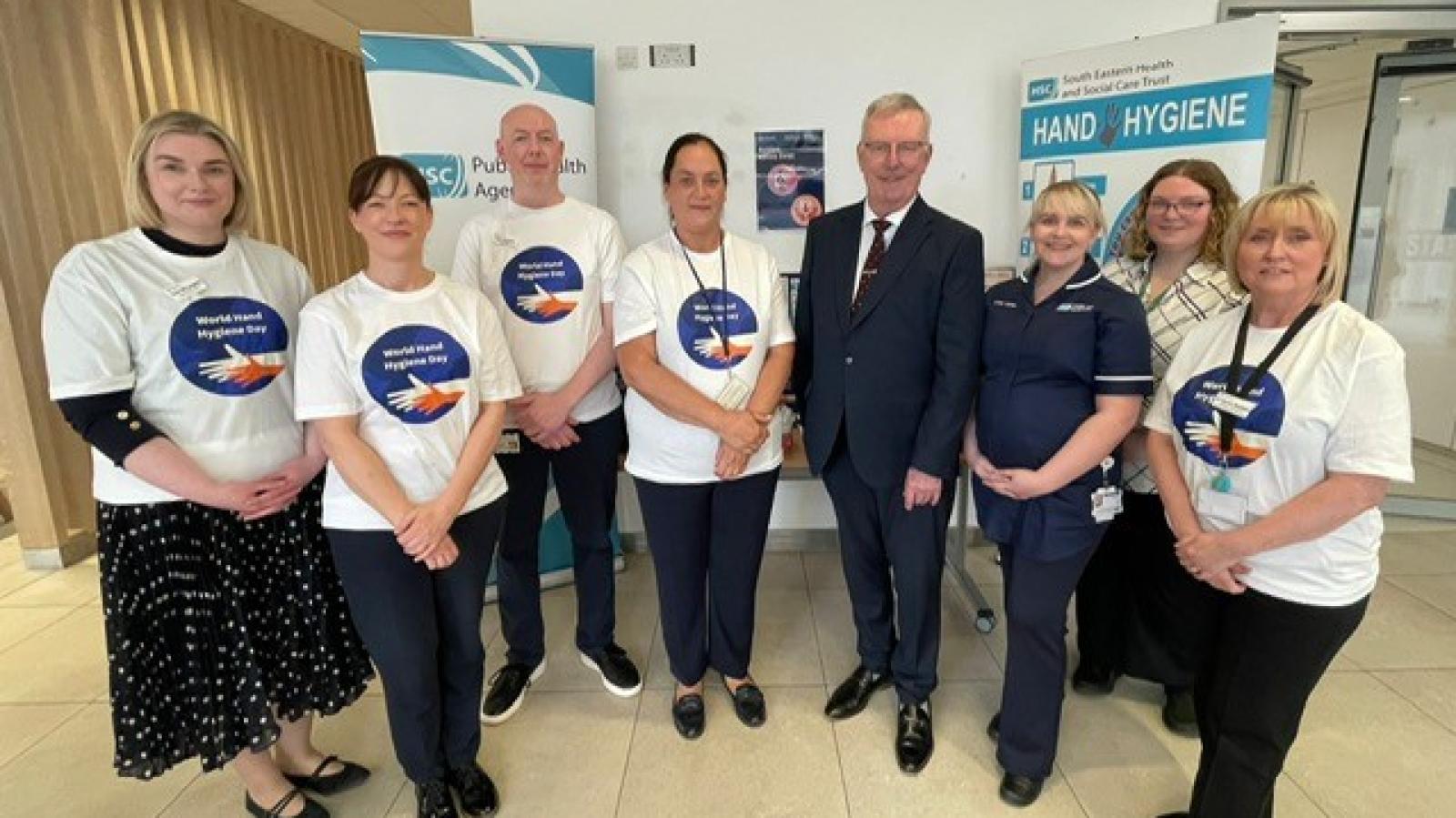
The Public Health Agency (PHA) has backed the World Health Organization’s (WHO) World Hygiene Day on 5th May as part of a global call to ensure proper hand hygiene in healthcare settings and everyday life, which can have lifesaving benefits as well as helping keep us well.
Caroline McGeary, Infection Prevention and Control Lead Nurse at the PHA, said: “World Hand Hygiene day is an opportunity to remind everyone about the role they can play in protecting their own health and those around them. Whether it’s a healthcare worker or a member of the public, there are steps we can all take to protect our health and those around us.
Healthcare settings
“Many healthcare-associated infections (HAIs) could be avoided each year through consistent hand hygiene. In healthcare settings, hand hygiene is critical to protecting patients, staff, and visitors from harmful germs and antibiotic-resistant bacteria. During World Hand Hygiene Day, we are encouraging healthcare staff and visitors across Northern Ireland to renew their commitment to hand hygiene by emphasising the importance of handwashing with soap and water, ensuring availability and use of sanitisers, and participating in facility-wide initiatives such as audits and clean hand pledges.”
Health Minister Mike Nesbitt added: “I am delighted to support the WHO’s campaign ‘Hand Hygiene saves lives. Safer care starts with clean hands’.
“I would remind and encourage everyone that the simple but effective step of consistent hand hygiene protects your health, prevents health care associated infections and combats antimicrobial resistance. Hand Hygiene is an essential first step in health care."
“My takeaway is that I often forget my wrists. Keeping them clean is as important to your hands when it comes to hygiene and infection prevention.”
Members of the public
Caroline continued: “It’s also important for the whole family to practise good personal hygiene in everyday life by washing our hands frequently and thoroughly with soap and hot running water.
“During the summer, popular outings such as farm visits and swimming pools can pose particular treats. All animals naturally carry a range of organisms, for example Shiga toxin-producing Escherichia coli (STEC), which can be transmitted to humans and can potentially cause severe infection, particularly in young children. Cryptosporidium is another organism which causes an infection of the gastrointestinal tract and can occur through contaminated recreational waters, including swimming pools.”
To reduce the risk of illness, all adults and children should follow some simple steps to ensure a fun day out:
Advice for visits to the farm:
- Wash hands thoroughly using soap and water and dry thoroughly with paper towels after handling animals or touching surfaces at the farm.
- Hands should always be washed before eating or drinking and after using the toilet.
Advice for swimmers:
- Don't swim when you have diarrhoea or have had diarrhoea within the past 48 hours.
- Take a shower before swimming
- Wash your hands after using the toilet or changing nappies.
- Please ensure babies and children wear purpose-made swimming nappies and take your child on bathroom breaks.
- Do not swallow water.
“Antibacterial hand gels and wipes are not a substitute for washing hands, as gels and wipes may not adequately remove germs and bugs in the way that soap and running water can. However, using such gels after hand washing with soap and water may reduce the risk of picking up these infections.
“A responsible adult should always supervise children’s personal hygiene to make sure it is carried out properly. By being aware and by taking some simple steps, we can all help to avoid illness,” concluded Caroline.
Ends