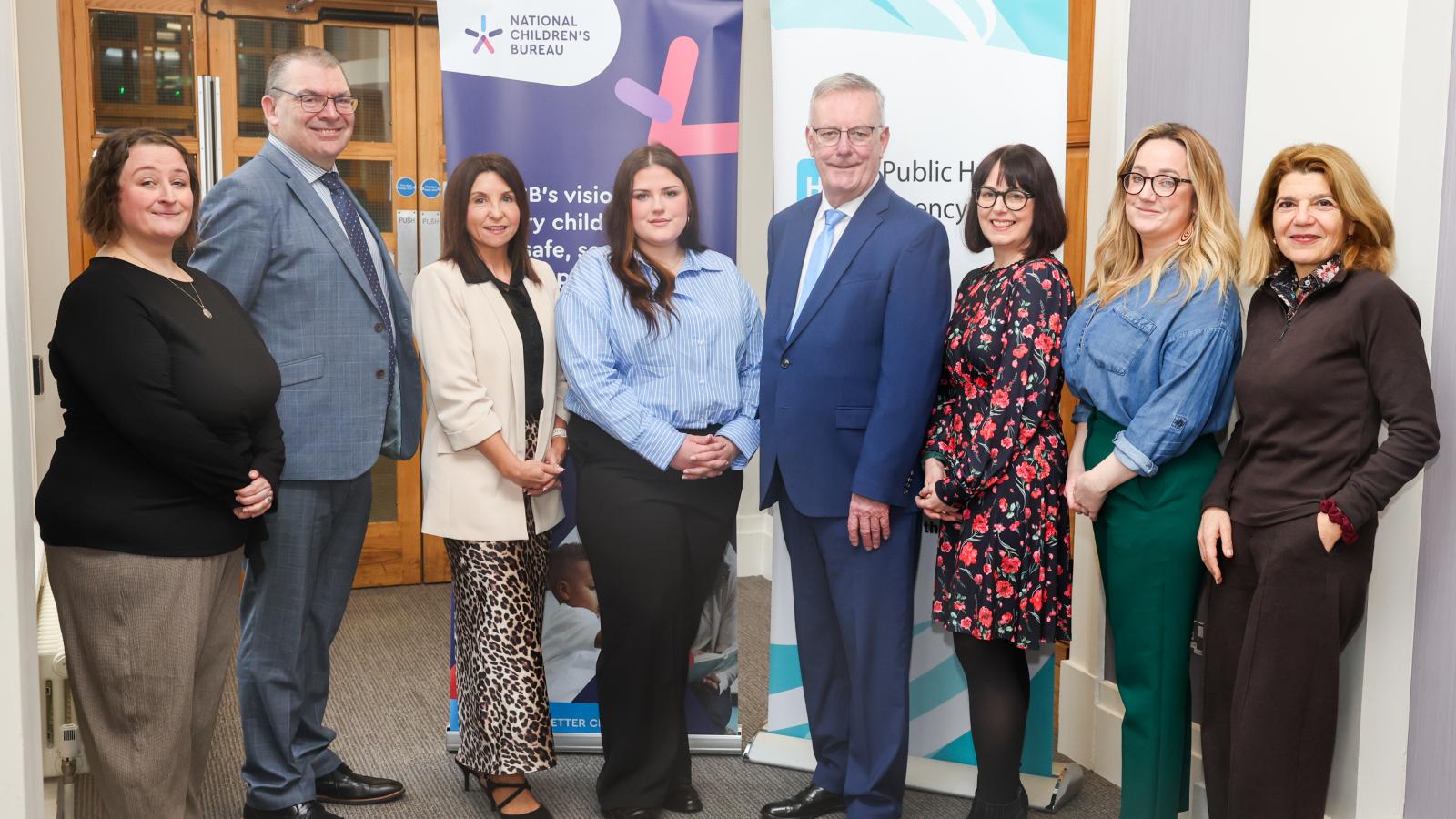
Representatives from across the statutory, voluntary and community sectors came together today (5 March) to launch Northern Ireland’s refreshed Infant Mental Health Framework and Action Plan. This plan, announced by Health Minister Mike Nesbitt, reaffirms a commitment by the Public Health Agency (PHA) and others to improve interventions from the antenatal period through to babies aged three years old.
The conference at which the plan was launched was attended by a wide range of senior representatives from health, education, early years, government and community organisations. Key speakers provided evidence of the importance of offsetting risk to babies during a critical stage of early childhood development. Lived experience was highlighted as delegates heard from a young mother supported through the young mums Mas project (Maternal Advocacy and Support). Her experience illustrated the core purpose of the refreshed framework.
Emily Roberts, Interim Director of Nursing at the PHA, said: “Infant Mental Health refers to the social and emotional development of babies from pregnancy through the first three years of life. Research consistently shows that early experiences – particularly the quality of attachment and caregiving relationships – strongly influence future mental health, physical health, educational attainment, and social functioning. While adversity and stress during pregnancy and early childhood can have lasting effects, evidence also shows that early intervention can significantly reduce risk and improve outcomes. Providing support at the earliest stages helps build emotional security, resilience, and healthy development.
“Since the introduction of Northern Ireland’s first Infant Mental Health Framework in 2016, awareness and understanding of infant development have grown significantly across sectors. This progress has been supported by the expansion of services, strengthened workforce development, and the emergence of innovative practice across health, social care, education, and community settings.
“The refreshed 2026 framework builds on this progress, placing renewed emphasis on cross-sector collaboration and highlighting how infant mental health connects with wider public health priorities, including reducing inequalities, embedding trauma-informed practice, and preventing long-term health difficulties. It also reflects growing recognition of how early relationships and parental wellbeing – particularly during the perinatal period – shape lifelong health, development, and resilience.
“The Public Health Agency remains committed to working collaboratively across government departments and sectors to ensure families receive the right support at the right time.”
The updated action plan aims to support consistent, coordinated delivery across health, education, and community services, ensuring families can access the right help at the right time, especially during pregnancy and the first 1,000 days.
The event took place against a backdrop of significant need. In 2024, 19,416 babies were born in Northern Ireland. Many families continue to face challenging circumstances, with 23% of children living in relative poverty and 20% in absolute poverty before housing costs. These pressures can have a profound impact on parental wellbeing, early relationships, and long-term outcomes for children.
Opening the event, Health Minister Mike Nesbitt said: “Evidence suggests the experiences in the first 1,000 days of a baby’s life are crucial to later outcomes. During this period, the baby’s brain is developing more rapidly than at any other period in life and is particularly sensitive to outside influences.
“Therefore, through improving infant mental health and strengthening infants’ attachments and relationships with their care givers, children are more likely to be on a positive developmental trajectory.
“The Infant Mental Health Framework highlights the importance of collaborative cross-departmental, cross-sectoral, inter-agency and multi-disciplinary working to give babies the best start in life.”
Frances Lyons, Head of Research and Evidence, and Director in Northern Ireland at the National Children’s Bureau, added: “NCB is delighted to have supported the Public Health Agency in hosting another successful conference that saw the launch of the refreshed Infant Mental Health Framework and Action Plan (2026) – Starting Well – from pre-birth to three years. The event highlighted the importance of cross-cutting investment and support of early intervention and collaborative working in improving infant mental health and lifelong outcomes. Our mission at NCB is to build better childhoods and brighter futures for every child and a focus on the first 1,000 days is critical.
“There remains a great need for targeted support for those families with babies and young children facing multiple complex challenges, such as poverty, poor mental health, or experience of ongoing trauma, and the impact that the combination of these can have on the wellbeing of a newborn infant and its parents. By providing support at all stages from pre-birth through to three years, services are giving infants the best opportunity to start well and meet their potential.
“It is vital in this challenging economic climate that the needs of babies, infants and their families are supported as the foundations of a thriving society. We look forward to continuing our work with stakeholders across the sector in Northern Ireland and beyond in creating services for starting well in life.”