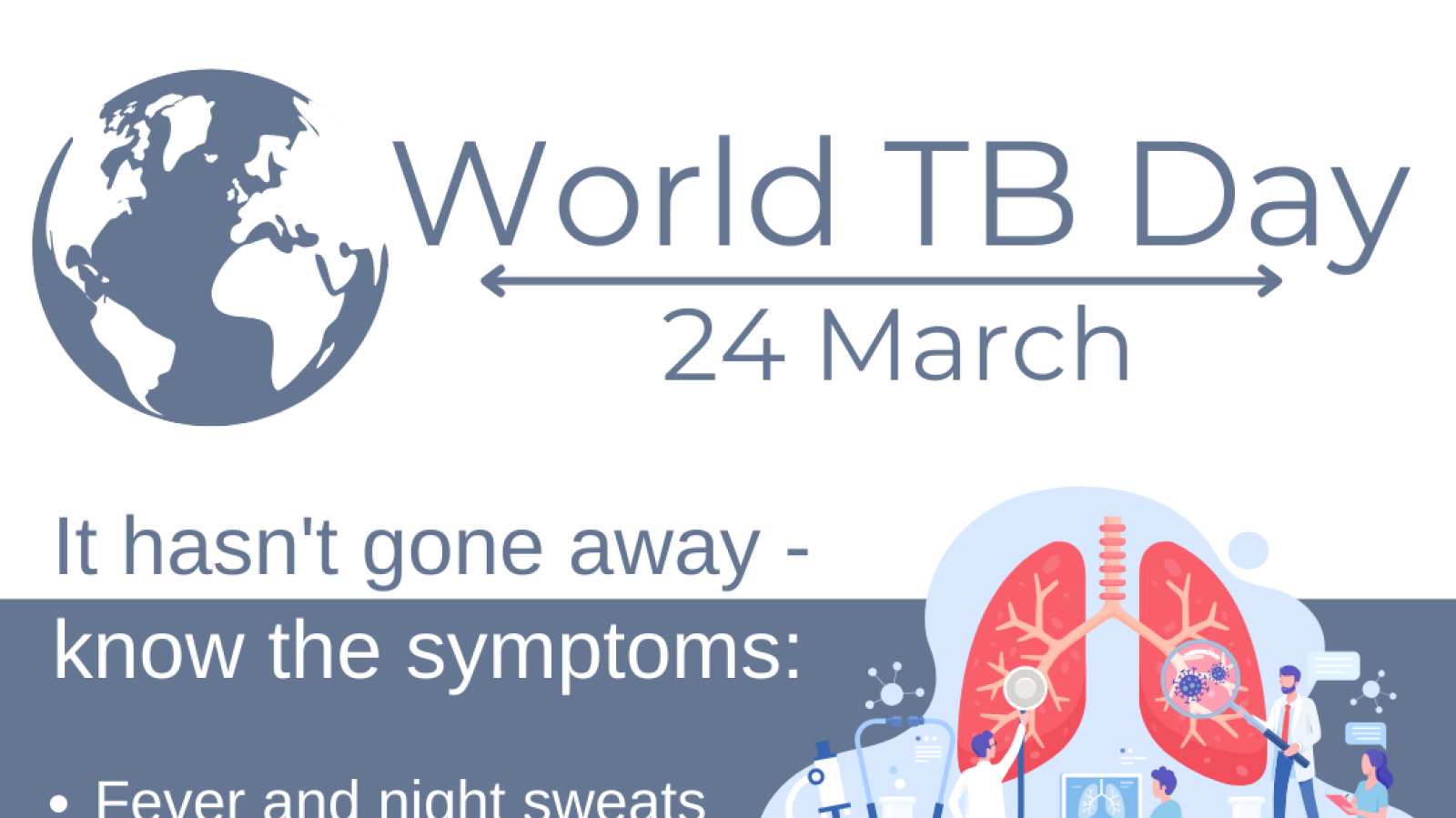
On World TB Day (Tuesday 24 March), the Public Health Agency (PHA) is raising awareness of the symptoms of tuberculosis (TB) as a greater recognition of the these can help prevent future cases.
There were 81 cases of active TB notified to the PHA in 2025, a decrease from 87 cases in 2024. This compares with 78 cases reported in 2023 and 69 in 2022.
Dr Jillian Johnston, Consultant in Health Protection at the PHA, said: “TB remains an important global and local public health issue, but with effective treatment, TB can be a curable condition. World TB Day is an opportunity to raise public awareness to help reduce transmission by encouraging early diagnosis and treatment.
“TB is an infection that is spread in the air by inhaling small droplets from someone with infectious TB of the lungs, who coughs, sneezes, talks or sings. The symptoms of TB include a prolonged cough, fever and unexplained weight loss. If anyone is concerned about their symptoms they should contact their GP as soon as possible.”
Any of the following symptoms may suggest TB:
- Fever and night sweats;
- Persistent cough;
- Unexplained weight loss;
- Blood in your sputum (phlegm or spit) at any time;
- A lack of appetite;
- Fatigue and a general sense of feeling unwell.
Almost anyone can get TB but some people are more at risk than others due to certain social risk factor. These include:
- people in close contact with someone who is infected, for example, living in the same house;
- people who have lifestyle or social risk factors, such as alcohol misuse, drug use or are homeless;
- people who have a condition that weakens their immune system such as renal conditions or diabetes, or those who are having treatment that weakens their immune system;
- people who have lived or spent time in a country or area with high levels of TB.
Bovine Tuberculosis
Another group of individuals that are at a slightly increased risk of TB are those from the farming community. TB in cattle is caused by the bacterium Mycobacterium bovis. The organism also has the capacity to infect and cause TB in humans.
Although the overall risk of bovine TB remains low, there were six bovine TB cases reported in Northern Ireland in 2025. For those working in the farming community there are steps you can take to reduce the risk of exposure to bovine TB:
- Wash hands thoroughly several times a day and always before eating, and after finishing work for the day;
- Do not drink or eat in animal areas;
- Wash skin wounds immediately with soap and running water and cover with a waterproof dressing;
- Avoid drinking milk that has not been pasteurised or boiled, or eating dairy products made with raw milk;
- If, despite the risks to human health involved, you or someone in your family still wishes to consume unpasteurised milk and its products, make sure that the milk comes from an officially-certified TB-free herd.
The UK has signed up to the World Health Organization (WHO) TB elimination targets by 2035, committing to support an annual reduction in TB incidence and transmission.
To help achieve this, the PHA is working with HSC Trusts and other partner organisations to increase awareness and help improve TB diagnosis and treatment, especially for those at higher risk of getting TB. Addressing TB goes beyond healthcare and requires the consideration of the wider social determinants of health and the support services around these issues. This collective approach aims to reduce infection and help people lead healthier lives.
For further information see www.pha.site/tb-leaflet and www.nidirect.gov.uk/conditions/tuberculosis-tb